Getting certified in peptide therapy is one of the smartest career moves a healthcare professional can make right now. The peptide therapeutics market is exploding — valued at $45.8 billion in 2023 and projected to surpass $78 billion by 2030 (Grand View Research, 2024). That means demand for qualified, certified practitioners is growing faster than the supply.
But here’s the problem: not all peptide therapy certifications are equal. Some programs are rigorous and industry-recognized. Others are little more than weekend workshops with a printed certificate. Knowing the difference — and choosing the right peptide therapy certification program — can define the trajectory of your medical career.
This article breaks down everything you need to know: what peptide therapy actually is, why certification matters, the top programs available, costs, career outcomes, and answers to the most common questions practitioners ask before enrolling.
What Is Peptide Therapy — and Why Is It Growing So Fast?
Peptides are short chains of amino acids — typically between 2 and 50 — that act as biological messengers in the body. They signal cells to perform specific functions: building muscle, regulating hormones, reducing inflammation, supporting immune function, and much more.
Unlike large-molecule biologics or synthetic small-molecule drugs, peptides are highly targeted, relatively well-tolerated, and in many cases, mimic molecules the body already produces naturally. This makes them extraordinarily attractive to both patients seeking performance and longevity benefits, and clinicians looking for precision tools.
Here’s a snapshot of why peptide therapy has gone from niche to mainstream:
- Precision targeting: Peptides bind to specific receptors, minimizing off-target side effects
- Wide therapeutic range: Applications span anti-aging, metabolic health, sexual wellness, cognitive function, wound healing, and immune modulation
- Patient demand: Google searches for “peptide therapy” have grown over 400% since 2019
- Research acceleration: Over 150 peptide drugs are currently in clinical trials globally (Peptide Therapeutics Foundation)
- Functional medicine boom: Integrative and concierge medicine practices are increasingly incorporating peptides as core offerings
“Peptides represent one of the most exciting frontiers in personalized medicine. They offer the specificity of biologics with a far more favorable safety profile.” — Dr. Edwin Lee, MD, Institute for Hormonal Balance
This growth has created a critical gap in the market: a shortage of certified peptide therapy practitioners who are trained to use these compounds safely, ethically, and effectively.
Why Peptide Therapy Certification Matters
You might wonder — if you already hold an MD, DO, NP, or PA license, do you really need a separate peptide therapy certification?
Suggested read: ISO 27001 Training and Certification: What You Need to Know in 2025
The answer is a resounding yes, and here’s why.
1. Peptides are not covered in standard medical training. Most medical schools and residency programs dedicate zero curriculum hours to peptide therapeutics. A certified peptide therapy practitioner has specialized training that a general clinician simply doesn’t possess.
2. Regulatory complexity demands specialized knowledge. Many peptides exist in a regulatory gray zone. Understanding which compounds are FDA-approved, which are available through compounding pharmacies, and what documentation is required is critical — and getting it wrong can cost you your license.
3. Patient safety depends on it. Improper peptide dosing, combination protocols, or failure to screen for contraindications can cause real harm. Certification programs train you to assess patients comprehensively and build evidence-based protocols.
4. It differentiates your practice. In an increasingly competitive healthcare landscape, a visible peptide therapy certification signals expertise to patients, referral partners, and payers. It’s a marketing asset as much as an educational one.
5. Liability and malpractice protection. Demonstrating that you received formal training in an area of practice is a key component of defending yourself in any adverse event claim.
Who Should Pursue Peptide Therapy Certification?
Peptide therapy certification programs are designed for licensed healthcare professionals who want to add peptide protocols to their clinical toolkit. The most common candidates include:
| Professional Type | Typical Motivation |
|---|---|
| Medical Doctors (MD/DO) | Anti-aging, regenerative, and functional medicine expansion |
| Nurse Practitioners (NP) | Hormone optimization and wellness clinics |
| Physician Assistants (PA) | Broadening scope within integrative practices |
| Pharmacists (PharmD) | Compounding specialization and clinical consultation |
| Registered Nurses (RN) | Aesthetic and IV therapy practice expansion |
| Naturopathic Doctors (ND) | Integrative biohacking and longevity protocols |
| Chiropractors (DC) | Regenerative musculoskeletal applications |
Some advanced programs also accept health coaches and wellness practitioners, though these participants typically cannot prescribe peptides and focus more on education, patient support, and coaching alongside prescribing clinicians.
The Core Curriculum: What a Peptide Therapy Certification Program Covers
Not all programs cover the same ground, but a quality certified peptide therapy curriculum should include the following modules:
Module 1: Biochemistry and Mechanisms of Action
This is the science foundation. You’ll learn how peptides interact with receptors, signaling cascades, and downstream physiological effects. Key peptides covered typically include:
Suggested read: BSI Certification ISO 27001: Everything Your Organization Needs to Know in 2025
- BPC-157 (Body Protective Compound) — tissue repair, gut health
- TB-500 (Thymosin Beta-4) — wound healing, inflammation modulation
- CJC-1295 / Ipamorelin — growth hormone secretagogues for body composition
- Semaglutide / Tirzepatide — GLP-1 receptor agonists for metabolic health
- Sermorelin — pituitary stimulation for HGH support
- PT-141 (Bremelanotide) — sexual health and libido
- Selank / Semax — cognitive function and neurological support
- LL-37 — antimicrobial and immune modulation
Module 2: Patient Assessment and Protocol Design
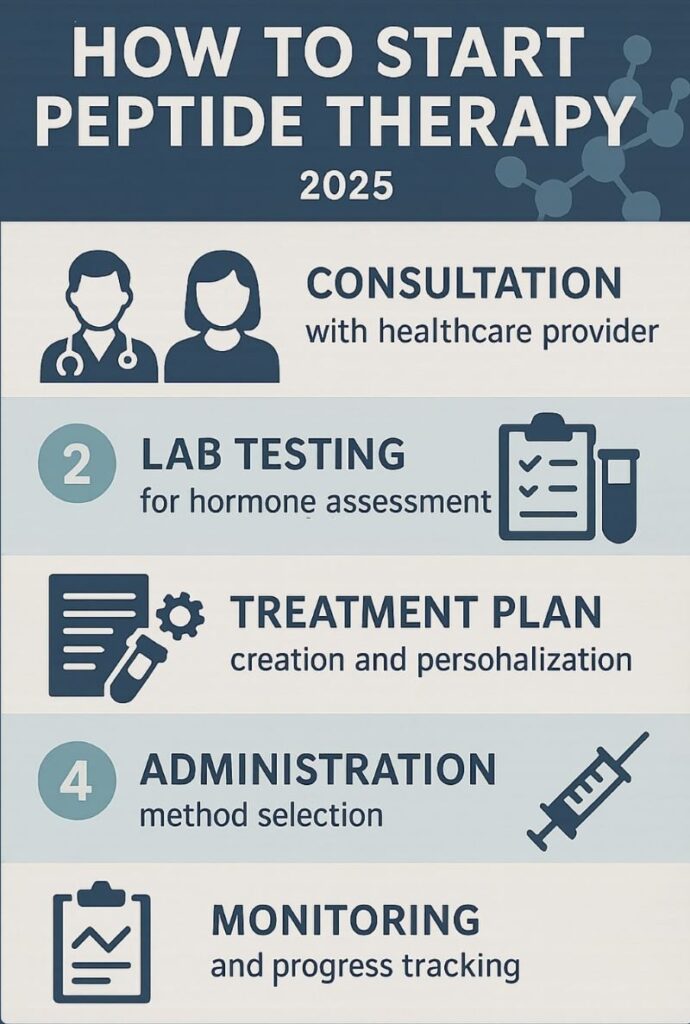
Here you learn to evaluate patients for peptide therapy candidacy. This includes:
- Comprehensive intake and lab panel interpretation
- Contraindication screening (active malignancy, autoimmune conditions, pregnancy)
- Designing individualized dosing schedules
- Cycling and off-period protocols
- Stacking considerations (combining multiple peptides safely)
Module 3: Regulatory and Legal Framework
This module is arguably the most important from a risk management standpoint. You’ll cover:
- FDA classification of peptide drugs vs. compounding gray areas
- The role of 503A and 503B compounding pharmacies
- Recent FDA actions restricting certain peptides (e.g., BPC-157 reclassification debates)
- Informed consent documentation
- State-specific prescribing regulations
- Telemedicine peptide prescribing rules
Module 4: Administration Techniques
Most peptides are delivered via subcutaneous injection, but delivery methods vary. Certification training typically includes:
- Subcutaneous (SubQ) injection technique
- Intranasal delivery (for peptides like Selank and Semax)
- Oral and topical applications where applicable
- Reconstitution of lyophilized peptides
- Storage requirements and stability considerations
Module 5: Practice Integration and Business Development
This is the often-overlooked module that helps you actually build a viable peptide practice. Topics include:
- Pricing and packaging peptide therapy services
- EMR documentation best practices
- Patient education and onboarding systems
- Marketing a peptide therapy practice compliantly
- Working with compounding pharmacies as a practice partner
Top Peptide Therapy Certification Programs in 2025
Here is a breakdown of the most recognized programs currently offering peptide therapy certification training for healthcare professionals:
1. A4M (American Academy of Anti-Aging Medicine)
The A4M is one of the most established organizations in functional and longevity medicine. Their fellowship and certification tracks include dedicated peptide therapy education as part of broader hormone optimization and regenerative medicine curricula.
- Format: Online + live workshops
- Duration: 6–12 months for full fellowship track
- Cost: $2,500–$6,500 depending on track
- Website: a4m.com
- Best For: MDs, DOs, and NPs seeking comprehensive anti-aging credentials
2. Peptide Society
The Peptide Society offers one of the most focused and clinically practical peptide therapy certification programs available. Their curriculum is built specifically around peptide protocols rather than embedded in a broader functional medicine framework.
- Format: Online self-paced + live Q&A sessions
- Duration: 4–8 weeks
- Cost: $997–$2,500
- Website: peptidesociety.org
- Best For: Practitioners who want peptide-specific training quickly
3. International Peptide Society (IPS)
The IPS is a newer but rapidly growing credentialing body focused exclusively on peptide education. They offer tiered certifications from foundational to advanced practitioner level.
- Format: Hybrid (online modules + virtual clinical case reviews)
- Duration: 8–16 weeks
- Cost: $1,500–$3,500
- Best For: NPs, PAs, and pharmacists entering the peptide space
4. Worldlink Medical
Worldlink is a well-respected organization in hormone therapy education that has expanded its curriculum to include peptide therapy. Their hormone and peptide therapy certification programs are particularly strong for practitioners focused on men’s and women’s health optimization.
- Format: Online + in-person intensives
- Duration: 2–4 days (intensives) or 3-month online track
- Cost: $1,500–$4,000
- Best For: Integrative and hormone-focused practices
5. The Institute for Functional Medicine (IFM)
While not exclusively a peptide therapy certification program, the IFM offers advanced modules on peptides within its broader functional medicine training. For practitioners who want peptide education embedded in a comprehensive systems-biology framework, this is an excellent option.
Suggested read: Is Advanced Medical Certification Legit? What You Need to Know Before Enrolling
- Format: Online + live conferences
- Duration: Variable
- Cost: $500–$3,000 per module
- Best For: Functional medicine practitioners expanding their toolkit
Peptide Therapy Certification Cost Breakdown
One of the most common questions practitioners ask is: how much does peptide therapy certification cost?
Here’s a realistic cost breakdown:
| Cost Component | Estimated Range |
|---|---|
| Certification program tuition | $997 – $6,500 |
| Study materials and textbooks | $100 – $400 |
| Live event or workshop attendance | $500 – $2,000 |
| Annual membership (certifying body) | $200 – $600/year |
| CME credits (if applicable) | Included or $100–$300 |
| Total First-Year Investment | $1,800 – $9,500 |
While these numbers may seem significant, consider the return on investment. A single peptide therapy patient on a comprehensive protocol may generate $300–$1,500 per month in practice revenue. Recouping your certification investment typically happens within the first few months of adding peptide services.
Case Study: How One NP Built a Six-Figure Peptide Practice After Certification
Background: Jessica M., a nurse practitioner with 12 years of experience in primary care, decided to pursue a peptide therapy certification in 2022 after noticing her patients repeatedly asking about longevity and optimization treatments she wasn’t equipped to provide.
What She Did:
- Enrolled in a 10-week online peptide certification program ($2,200)
- Partnered with a 503A compounding pharmacy to source protocols
- Added peptide consultations as a $350 cash-pay service
- Built a monthly “peptide protocol” subscription at $450/month
Results at 12 Months:
- 68 active peptide patients
- ~$28,000/month in peptide-related revenue
- NPS (Net Promoter Score) of 94 — patients were enthusiastically referring others
- Reduced reliance on insurance billing by 40%
“The certification gave me the confidence to actually talk to patients about peptides instead of deflecting. Within a year, it completely transformed my practice model.” — Jessica M., NP
This case study illustrates what many practitioners report: certified peptide therapy training pays for itself quickly and opens entirely new revenue streams.
How to Choose the Right Peptide Therapy Certification Program
With multiple programs available, how do you choose? Ask these key questions before enrolling:
1. Is the program designed for licensed healthcare professionals? Look for programs that require a current active license for enrollment. This ensures the curriculum is clinically relevant — not watered-down wellness education.
Suggested read: Sclerotherapy Certification: What You Need to Know Before You Start Treating Veins
2. Does it cover regulatory and legal content? Any reputable peptide therapy certification program must include current regulatory guidance. If a program doesn’t cover FDA compliance and compounding pharmacy regulations, walk away.
3. What are the faculty credentials? Instructors should be practicing MDs, DOs, or PhDs with demonstrable clinical experience in peptide therapy — not just speakers on the conference circuit.
4. Is CME credit offered? Continuing Medical Education credit adds value and demonstrates that the program meets established educational standards.
5. What is the post-certification support? Look for programs that offer alumni communities, updated protocols, and ongoing clinical case discussions. The peptide landscape evolves rapidly, and staying current matters.
6. Can you verify the credential? A legitimate certification should be verifiable by other parties. This is a standard in credentialing — similar to how professionals verify other types of credentials, such as how to verify SOC 2 certification, where third-party validation is a non-negotiable quality marker.
Peptide Therapy Certification and Continuing Education (CME)
One of the important practical considerations is whether your peptide therapy certification qualifies for Continuing Medical Education (CME) credits. Most states require licensed practitioners to complete a set number of CME hours per renewal cycle.
Here’s how the top programs stack up on CME:
| Program | CME Credits Offered |
|---|---|
| A4M Fellowship | Up to 300 AMA PRA Category 1 Credits |
| Worldlink Medical | 15–30 CME per event |
| Peptide Society | Limited (check current offerings) |
| IFM Modules | AMA PRA Category 1 Credits |
Always confirm CME accreditation status directly with the program before enrolling, as this can change year to year.
The Future of Peptide Therapy Certification
The regulatory and clinical landscape for peptides is shifting. Here are the trends shaping the future of peptide therapy certification:
- Increased FDA scrutiny: The FDA has been moving to reclassify certain popular peptides (like BPC-157 and TB-500) from compounded preparations to biologics, which would restrict their prescribing. Certified practitioners will be far better positioned to navigate these changes.
- Telehealth expansion: As peptide therapy moves online, certification becomes even more important as a trust signal for patients who cannot meet their provider in person.
- Insurance and reimbursement shifts: Some peptides (particularly GLP-1 agonists like semaglutide) are gaining insurance coverage, creating new billing and documentation requirements that certified practitioners will be trained for.
- AI-assisted protocol design: Emerging platforms are using AI to help practitioners design peptide protocols. Understanding the underlying science through certification will help practitioners use these tools responsibly.
- Standardization push: Industry bodies are pushing for standardized peptide therapy certification requirements across states, similar to how hormone therapy prescribing has been increasingly regulated.
Frequently Asked Questions About Peptide Therapy Certification
What is a peptide therapy certification?
A peptide therapy certification is a professional credential issued to licensed healthcare practitioners who have completed a structured educational program covering the science, clinical application, regulatory framework, and safety protocols of peptide therapeutics. It demonstrates that the holder has specialized knowledge beyond standard medical training.
Suggested read: ISO 27001 Certification in Manila: Everything Your Business Needs to Know in 2026
Who can get a peptide therapy certification?
Most programs are open to licensed healthcare professionals including MDs, DOs, NPs, PAs, PharmDs, RNs, and NDs. Some programs accept health coaches and wellness practitioners for non-prescribing educational tracks.
Is peptide therapy certification required by law?
No state currently mandates a specific peptide therapy certification for prescribing peptides. However, certification is widely recognized as a best-practice standard of care and provides important liability protection.
How long does it take to get certified in peptide therapy?
Program duration varies. Intensive workshops can be completed in 2–4 days, while comprehensive online programs typically run 4–16 weeks. Fellowship tracks that include peptides as part of broader anti-aging curricula may take 6–12 months.
How much does peptide therapy certification cost?
Costs range from approximately $997 for focused online programs to over $6,500 for full fellowship tracks. When factoring in study materials, live events, and annual membership fees, first-year total investment typically falls between $1,800 and $9,500.
What peptides will I learn about during certification?
Quality programs cover a broad range of peptides including BPC-157, TB-500, CJC-1295/Ipamorelin, Sermorelin, PT-141, Semaglutide, Selank, Semax, LL-37, and others. The curriculum should also cover emerging peptides as the field evolves.
Can I prescribe peptides without a certification?
Licensed prescribers (MDs, DOs, NPs, PAs) can legally prescribe peptides in most jurisdictions without a specific peptide therapy certification. However, doing so without proper training carries significant clinical, ethical, and legal risks.
How do I verify a peptide therapy certification is legitimate?
A legitimate certification should be issued by a recognized professional organization, verifiable through the organization’s official registry, and ideally accredited for CME credit. Ask the certifying body directly about their verification process — legitimate credentials are always verifiable.
Call to Action: Start Your Peptide Therapy Certification Journey Today
The peptide therapy market is growing rapidly — and so is the demand for qualified, certified peptide therapy practitioners. Whether you’re a physician looking to launch a longevity practice, a nurse practitioner building a cash-pay hormone and wellness clinic, or an integrative health provider expanding your clinical repertoire, a peptide therapy certification is the credential that will set you apart.
Here’s how to take the next step:
- Assess your goals — Are you seeking comprehensive training or a focused peptide-only track?
- Compare programs — Use the program comparison table in this article to shortlist your top choices
- Verify CME eligibility — Confirm credits apply to your state license renewal requirements
- Enroll and commit — Most programs offer payment plans to make the investment manageable
- Begin building your peptide practice — Even before completing certification, start identifying your target patient population
🎯 Ready to earn your peptide therapy certification? Explore accredited programs today and join the growing community of practitioners at the forefront of precision medicine.
Suggested read: Certificate of Insurance for Workers Compensation: What Every Business Owner Must Know
Citation and Sources
- Grand View Research. (2024). Peptide Therapeutics Market Size, Share & Trends Analysis Report. Retrieved from grandviewresearch.com
- Peptide Therapeutics Foundation. (2023). Annual Industry Report: Peptides in Clinical Development. Retrieved from peptidefoundation.org
- American Academy of Anti-Aging Medicine. (2024). Fellowship and Certification Programs. Retrieved from a4m.com
- Peptide Society. (2024). Peptide Therapy Certification Program. Retrieved from peptidesociety.org
- U.S. Food & Drug Administration. (2023). Compounded Drug Products That Are Essentially Copies of Approved Drug Products. Retrieved from fda.gov
- Lee, E. (2023). Clinical Applications of Peptide Therapy in Integrative Medicine. Institute for Hormonal Balance.
This article is intended for licensed healthcare professionals and is for educational purposes only. It does not constitute medical or legal advice. Always consult current regulatory guidance and applicable state laws before prescribing or administering peptide therapies.