Managing digital certificates has become one of the most critical — and most overlooked — responsibilities in modern IT security. As organizations scale and their digital infrastructure grows, keeping track of hundreds or even thousands of SSL/TLS certificates, code-signing certificates, and email certificates manually becomes nearly impossible. That’s where a digital certificate manager steps in to save the day.
Whether you’re an IT administrator, a security professional, or a business owner trying to protect your online assets, understanding how certificate lifecycle management works — and how the right tools can automate it — can mean the difference between a secure operation and a costly outage or breach.
What Is a Digital Certificate Manager?
A digital certificate manager is a software platform or service designed to automate and centralize the entire lifecycle of digital certificates within an organization. This includes the issuance, renewal, revocation, and monitoring of certificates across servers, applications, devices, and networks.
Digital certificates are electronic documents that use a digital signature to bind a public key with an identity — such as a person, organization, or device. They are the backbone of secure communication on the internet, enabling HTTPS, encrypted email, code signing, and more. Without proper management, expired or misconfigured certificates can cause website outages, security breaches, and compliance violations.
A digital certificate manager acts as a central control panel for all these credentials. Instead of relying on spreadsheets or manual calendar reminders, organizations use these tools to get real-time visibility into their certificate inventory, automate renewals, and enforce security policies at scale.
Why Digital Certificate Management Matters in 2025
The scale of the problem is staggering. According to a 2024 report by Venafi, the average large enterprise manages over 250,000 machine identities, many of which are digital certificates. Meanwhile, Google has moved toward 90-day certificate validity periods, putting even more pressure on security teams to stay on top of renewals.
Consider these statistics:
- 🔐 Over 60% of organizations have experienced at least one certificate-related outage in the past two years (Source: Ponemon Institute)
- 💸 The average cost of a certificate-related outage can exceed $5,400 per minute for large enterprises
- 📉 57% of IT teams say they lack full visibility into all the certificates in their environment
- ⏱️ Certificate lifespans have shortened from 2 years (2020) to 1 year (2021) and may soon be as short as 47 days
The trend is unmistakable: certificates are becoming shorter-lived and more numerous. Manual management is no longer viable. Businesses that fail to adopt a proper certificate lifecycle management solution are playing a dangerous game.
Core Features of a Digital Certificate Manager
Not all certificate management solutions are created equal. When evaluating a digital certificate manager, look for these essential capabilities:
Suggested read: What Is a Workers Comp Insurance Certificate and Why Does Your Business Actually Need One?
1. Certificate Discovery and Inventory
The first step in managing certificates is knowing what you have. A good certificate management tool can automatically scan your entire network — including internal systems, cloud environments, and third-party services — to build a complete, real-time inventory of every certificate in use.
| Feature | Why It Matters |
|---|---|
| Automated discovery | Finds shadow IT and forgotten certificates |
| Real-time inventory | Always-current view of your certificate landscape |
| Multi-environment support | Covers cloud, on-prem, and hybrid setups |
| Certificate metadata tracking | Tracks issuer, expiry, algorithm, and key size |
2. Automated Certificate Renewal
Automation is the heartbeat of modern certificate management. A digital certificate manager can automatically renew certificates before they expire, eliminating the risk of human error or missed renewal windows. This is especially critical now that certificate lifespans are getting shorter every year.
Many platforms support ACME protocol (Automated Certificate Management Environment), which allows certificates to be renewed without any human intervention. Integration with Certificate Authorities (CAs) like DigiCert, GlobalSign, Sectigo, and Let’s Encrypt means your certificates are always current.
3. Certificate Revocation Management
When a certificate is compromised or no longer needed, it must be revoked immediately. A digital certificate manager handles this efficiently by communicating directly with the CA’s Certificate Revocation List (CRL) or the Online Certificate Status Protocol (OCSP) service.
4. Policy Enforcement and Compliance
Compliance frameworks like PCI DSS, HIPAA, SOC 2, and GDPR all have requirements around cryptographic standards and certificate management. A certificate manager enforces policies such as:
- Minimum key length (e.g., RSA 2048-bit or higher)
- Approved certificate authorities only
- Maximum certificate validity periods
- Prohibition of SHA-1 or MD5 algorithms
5. Alerting and Notifications
Proactive alerting is one of the most valuable features of any certificate management platform. Administrators receive notifications at configurable intervals before a certificate expires — say, 90, 60, 30, and 7 days out. This layered approach ensures nothing slips through the cracks.
6. Integration with DevOps Pipelines
Modern software development moves fast. A powerful digital certificate manager integrates natively with DevOps tools like Jenkins, GitHub Actions, HashiCorp Vault, Kubernetes, and Ansible. This allows development teams to request, deploy, and rotate certificates as part of their CI/CD workflows without waiting for IT tickets.
Types of Digital Certificates Managed
A comprehensive certificate management solution handles a wide range of certificate types:
- SSL/TLS Certificates — Secure HTTPS connections for websites and APIs
- Code Signing Certificates — Verify the authenticity of software and scripts
- S/MIME Certificates — Encrypt and sign email communications
- Client Certificates — Authenticate users and devices to network resources
- Document Signing Certificates — Legally bind signatures to electronic documents
- IoT Device Certificates — Secure machine-to-machine communications
Each type has its own lifecycle, issuing authority requirements, and revocation procedures. Managing all of these manually across a large organization would require a dedicated team working full-time — and even then, mistakes are inevitable.
How a Digital Certificate Manager Works: Step-by-Step
Understanding the certificate lifecycle helps explain why automation is so powerful. Here’s how a modern digital certificate manager handles the process end to end:
Suggested read: What Is a Central Station Alarm Certificate and Why Does Every Homeowner Need One?
Step 1: Discovery The platform scans all internal and external-facing infrastructure to identify existing certificates, including those issued by unknown or shadow CAs.
Step 2: Enrollment New certificate requests are submitted to approved Certificate Authorities through the platform. Templates enforce policy — administrators don’t have to configure each certificate from scratch.
Step 3: Provisioning Once issued, the certificate is automatically deployed to the correct server, load balancer, application, or device. No manual SSH sessions or FTP uploads required.
Step 4: Monitoring The platform continuously monitors the health and validity of every certificate in the inventory. Any anomaly — expiration approaching, weak algorithm detected, unauthorized CA — triggers an alert.
Step 5: Renewal Before expiry, the system automatically renews and re-deploys the certificate. Some platforms do this entirely without human involvement using the ACME protocol.
Step 6: Revocation When a certificate needs to be revoked — due to compromise, employee departure, or system decommission — the manager handles the revocation request and updates internal records.
Top Digital Certificate Manager Tools in 2025
Here’s a comparison of some leading certificate management platforms available today:
| Platform | Best For | Key Strengths | Pricing Model |
|---|---|---|---|
| Keyfactor Command | Enterprises | Deep CA integration, PKI automation | Enterprise license |
| DigiCert CertCentral | Mid-to-large orgs | User-friendly UI, broad CA support | Per-cert + subscription |
| Venafi TLS Protect | Large enterprises | Machine identity focus, DevOps ready | Enterprise license |
| AppViewX CERT+ | Automation-heavy teams | Workflow automation, REST APIs | Subscription |
| AWS Certificate Manager | AWS-native orgs | Free for AWS services, easy provisioning | Free (for AWS use) |
| Let’s Encrypt + Certbot | Small orgs / Dev | Free, ACME-based automation | Free |
| Sectigo Certificate Manager | SMBs to enterprises | Broad cert types, intuitive dashboard | Per-cert + subscription |
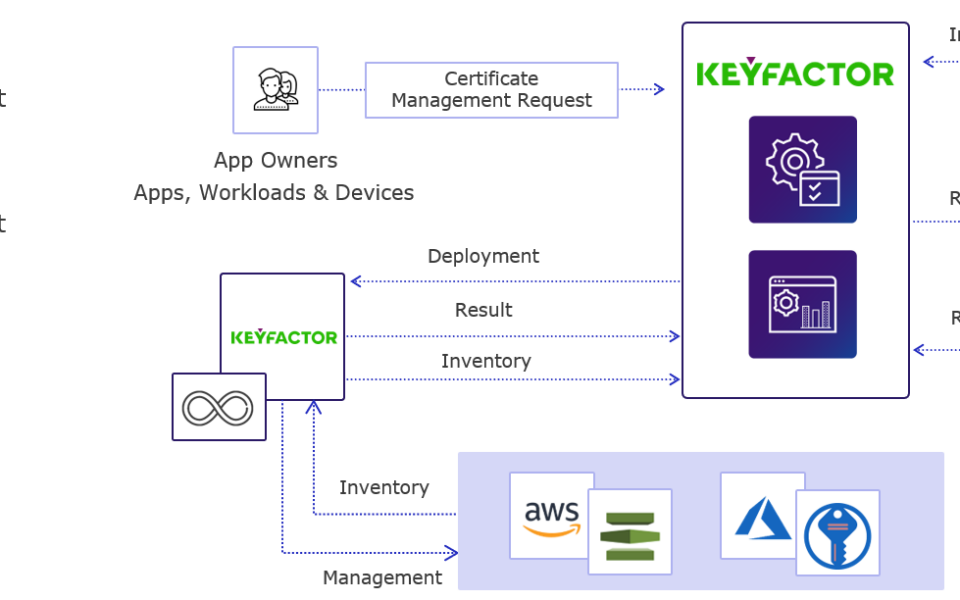
Pro tip: Many organizations use a combination of tools — for example, AWS Certificate Manager for cloud workloads and an enterprise CLM platform like Keyfactor for on-premises PKI.
Digital Certificate Manager vs. Manual Certificate Tracking
Let’s be blunt: managing certificates via spreadsheets, shared inboxes, or calendar reminders is a recipe for disaster. Here’s a direct comparison:
| Aspect | Manual Tracking | Digital Certificate Manager |
|---|---|---|
| Certificate discovery | Incomplete, ad hoc | Automated, comprehensive |
| Renewal process | Error-prone, manual | Automated, policy-driven |
| Visibility | Low | Full, real-time |
| Compliance reporting | Time-consuming | One-click reports |
| Scalability | Breaks down past ~50 certs | Handles hundreds of thousands |
| Incident response | Reactive | Proactive alerts |
| Audit trail | Minimal | Full logging and history |
The data doesn’t lie. Organizations that switch from manual tracking to a dedicated digital certificate manager report dramatic reductions in outages and security incidents.
Suggested read: Alarm Certificate: What It Is, Why You Need One, and How It Saves You Money on Insurance
Case Study: How a Fortune 500 Company Prevented a Major Outage
A global financial services firm with operations in 40+ countries was managing over 180,000 digital certificates across its infrastructure. Their IT team relied on a combination of spreadsheets and email alerts — a system that had worked “well enough” for years.
Then, in a single week, three critical certificates expired unnoticed, causing payment processing APIs to go offline. The incident lasted 6 hours and cost the firm an estimated $2.1 million in lost transactions and remediation costs. Customer trust took an additional hit that was harder to quantify.
Following the incident, the firm implemented an enterprise certificate lifecycle management platform. Within 90 days:
- ✅ Full certificate inventory was established (180,000+ certificates catalogued)
- ✅ Zero unplanned certificate expirations occurred in the following 12 months
- ✅ Certificate renewal time dropped from 4 days average to under 2 hours
- ✅ Compliance reporting for PCI DSS was reduced from 3 weeks to a single afternoon
This is not an isolated story. It’s a pattern seen across industries from healthcare to retail to government.
Certificate Management and Zero Trust Security
Zero Trust is the modern security framework built on the principle of “never trust, always verify.” Every user, device, and application must continuously prove its identity before accessing resources. Digital certificates are a cornerstone of Zero Trust architecture.
A robust digital certificate manager plays a central role in Zero Trust by:
- Issuing short-lived certificates that reduce the attack window if a credential is compromised
- Automating certificate rotation so that credentials are constantly refreshed
- Enforcing mutual TLS (mTLS) authentication between services and microservices
- Integrating with identity providers (like Okta, Azure AD, or Ping Identity) for unified access management
As Zero Trust adoption accelerates — Gartner predicts that 60% of enterprises will have formal Zero Trust programs by 2025 — the demand for sophisticated certificate management tools will only grow.
Digital Certificate Manager for Educational Institutions
Schools, universities, and training organizations increasingly rely on digital certificates to secure student portals, learning management systems, and staff communications. But education sector IT teams often operate with limited budgets and staff.
For administrators or educators pursuing leadership credentials, tools like online principal certification programs are delivered entirely online — and the security of the platforms delivering those programs depends on properly managed SSL/TLS certificates. A certificate management tool helps institutions ensure that online learning environments remain trusted, secure, and compliant without overburdening small IT teams.
How to Choose the Right Digital Certificate Manager for Your Organization
Choosing the right certificate management solution is not a one-size-fits-all decision. Consider these factors:
Suggested read: Keyfactor Certificate Management: How It Works and Why Enterprises Need It Now
1. Scale of Your Certificate Environment If you have fewer than 100 certificates, a lightweight tool or cloud-native solution may be sufficient. For 1,000+ certificates, you need an enterprise-grade CLM platform with full automation.
2. On-Premises vs. Cloud vs. Hybrid Some tools are cloud-native (great for SaaS and cloud-first organizations), while others offer on-premises deployment (preferred by organizations in regulated industries like finance or defense).
3. CA Agnosticism The best platforms support multiple CAs — public, private, and internal PKI — giving you flexibility without vendor lock-in.
4. Integration Requirements List your existing tools: SIEM platforms, ITSM systems (ServiceNow), DevOps pipelines, load balancers, and HSMs. Your chosen platform must integrate cleanly with these systems.
5. Compliance and Reporting Needs If you operate under PCI DSS, HIPAA, FedRAMP, or ISO 27001, look for platforms with built-in compliance templates and audit trail capabilities.
6. Support and SLA For mission-critical environments, choose a vendor that offers 24/7 support, SLA guarantees, and a dedicated customer success team.
Common Mistakes Organizations Make with Certificate Management
Even organizations that invest in a digital certificate manager can still run into problems if they don’t use it correctly. Here are the most common pitfalls:
- Incomplete discovery: Assuming you’ve found all certificates without running a comprehensive network scan
- Ignoring internal PKI: Focusing only on public-facing certificates and neglecting internal CA-issued certs
- Skipping policy enforcement: Using the tool as a tracker but not enforcing issuance policies
- Poor role-based access control: Giving too many team members admin rights, creating audit and security risks
- Not testing renewals: Automating renewal without testing that the newly deployed certificate actually works
- Neglecting IoT and OT devices: Forgetting that operational technology and IoT devices also use certificates
The Future of Digital Certificate Management
Several trends are reshaping how organizations think about certificate management:
Post-Quantum Cryptography (PQC) The National Institute of Standards and Technology (NIST) finalized its first set of post-quantum cryptographic standards in 2024. Organizations will need to migrate their PKI infrastructure to quantum-resistant algorithms — a massive undertaking that will require sophisticated certificate management tools to execute at scale.
Shorter Certificate Lifespans Google’s push for 90-day (and possibly 47-day) certificate validity means that manual renewal is simply not an option anymore. Full automation through a digital certificate manager will become a baseline requirement, not a luxury.
Suggested read: Access Certification Process: What It Is, How It Works, and Why It Matters for Your Organization
AI-Powered Certificate Intelligence Next-generation platforms are beginning to use machine learning to predict certificate-related risks, detect anomalous issuance patterns, and recommend policy improvements based on industry benchmarks.
Decentralized Identity Blockchain-based and self-sovereign identity models are emerging as alternatives to traditional PKI. While still early-stage, these models will eventually integrate with or challenge traditional certificate management approaches.
🚀 Ready to Take Control of Your Certificate Infrastructure?
Don’t wait for an outage or a security breach to force your hand. A modern digital certificate manager gives your team the visibility, automation, and control needed to secure every certificate across your organization — from cloud-native apps to legacy systems.
Start with a free certificate discovery scan offered by platforms like Keyfactor, Venafi, or DigiCert to understand the true scope of your certificate environment. Then evaluate solutions based on your scale, stack, and compliance needs.
The cost of inaction is always higher than the cost of preparation.
Citation
Keyfactor. (2024). What is Certificate Management? Keyfactor Resources. Retrieved April 13, 2026, from https://www.keyfactor.com/resources/what-is-certificate-management/
Ponemon Institute. (2024). 2024 State of Certificate Lifecycle Management Report. Ponemon Institute LLC.
Venafi. (2024). Machine Identity Management for Dummies. Venafi, Inc.
National Institute of Standards and Technology. (2024). Post-Quantum Cryptography Standards. U.S. Department of Commerce.
Frequently Asked Questions About Digital Certificate Manager
What is a digital certificate manager used for?
A digital certificate manager is used to automate and centralize the management of SSL/TLS certificates, code signing certificates, email certificates, and other machine identities across an organization. It handles certificate discovery, issuance, renewal, revocation, and compliance reporting.
Suggested read: MBA Certificate vs MBA Degree: Which One Is Actually Worth Your Time and Money?
How does a digital certificate manager improve security?
By providing full visibility into all certificates and automating renewals, a digital certificate manager eliminates the risk of expired certificates — which can expose organizations to man-in-the-middle attacks, data breaches, and service outages. It also enforces cryptographic policy standards across the entire certificate environment.
Is a digital certificate manager only for large enterprises?
No. While large enterprises face the most complexity, certificate management tools are valuable for organizations of any size. Even small businesses running e-commerce sites or SaaS platforms benefit from automated SSL monitoring and renewal. Cloud-native options like AWS Certificate Manager and Let’s Encrypt with Certbot are free and accessible to small teams.
What is the difference between a digital certificate manager and a PKI solution?
A PKI (Public Key Infrastructure) solution encompasses the full framework for issuing and managing digital certificates, including Certificate Authorities, registration authorities, and cryptographic policies. A digital certificate manager is a tool that helps organizations manage the certificates issued by a PKI — whether internal or external — across their environment. Many enterprise platforms offer both PKI and certificate management in a single solution.
How often should digital certificates be renewed?
Certificate lifespans are getting shorter. As of 2025, most SSL/TLS certificates are valid for 1 year or less, with Google pushing for 90-day validity. A digital certificate manager automates the renewal process so that certificates are always refreshed well before expiry, regardless of how short the validity window becomes.
Can a digital certificate manager integrate with cloud environments?
Yes. Leading certificate management platforms integrate natively with AWS, Azure, Google Cloud, Kubernetes, and other cloud environments. They can automatically discover and manage certificates across multi-cloud and hybrid deployments, giving organizations a single pane of glass for their entire certificate inventory.
What happens if a digital certificate expires?
An expired certificate causes the affected service — whether a website, API, or internal application — to become untrusted. Browsers display security warnings, and many clients will refuse to connect entirely. This results in service outages, lost revenue, and reputational damage. A digital certificate manager prevents this by automating renewal and sending proactive alerts before expiration.
Is there an open-source digital certificate manager available?
Yes. Certbot (from the Electronic Frontier Foundation) paired with Let’s Encrypt is a popular open-source solution for automating SSL/TLS certificate management. For more complex environments, EJBCA is an open-source PKI platform, and Cert-Manager is a widely used certificate management controller for Kubernetes. These free tools are excellent starting points for organizations with technical expertise.