What Is a UTI Certificate?
In the digital age, verifying your identity online has become as important as signing a physical document. A UTI certificate — issued through UTI Infrastructure Technology and Services Limited (UTIITSL) — is a government-authorized Digital Signature Certificate (DSC) that allows individuals, businesses, and organizations to authenticate their identity and sign documents electronically with legal validity.
UTIITSL is one of India’s most trusted certifying authorities, licensed by the Controller of Certifying Authorities (CCA) under the Information Technology Act, 2000. This makes every UTI certificate legally binding and widely accepted across government portals, corporate filings, banking systems, and compliance platforms.
Think of a UTI certificate as your digital fingerprint — a secure, encrypted credential that proves you are who you say you are when transacting online. Whether you’re filing income tax returns, participating in e-tendering, or registering a company with the Ministry of Corporate Affairs (MCA), a UTI certificate is often not just useful — it’s mandatory.
Why UTI Certificates Matter in Today’s Digital Economy
The shift toward paperless governance and digital commerce has made digital signature certificates indispensable. According to data from the Ministry of Electronics and Information Technology (MeitY), India processed over 9 crore DSC transactions in a single fiscal year, reflecting the explosive growth of digital authentication needs.
Here’s why UTI certificates are central to this transformation:
- Legal Recognition: Under the IT Act, 2000, a digitally signed document holds the same legal status as a handwritten signature.
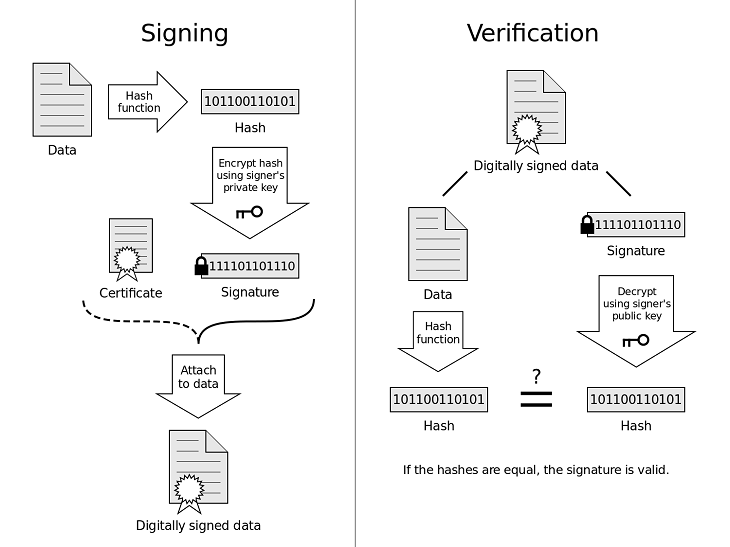
- Security: UTI certificates use Public Key Infrastructure (PKI) technology with 2048-bit encryption, making forgery virtually impossible.
- Speed: Documents can be signed and verified in seconds, eliminating courier delays and physical paperwork.
- Cost Efficiency: Businesses save significantly on printing, courier, and storage costs.
- Compliance: Regulatory bodies like SEBI, MCA, and the Income Tax Department mandate digital signatures for specific filings.
“Digital signatures are no longer optional for enterprises operating in India — they are the backbone of compliant, efficient, and secure business operations.” — Ministry of Electronics and Information Technology, India
Types of UTI Certificates: Which One Do You Need?
Not all UTI certificates are the same. UTIITSL offers different classes and types of digital signature certificates designed for specific use cases. Understanding which type suits your needs is the first step toward digital compliance.
Class 3 Digital Signature Certificate
The Class 3 DSC is the most widely used UTI certificate today. It replaced the older Class 2 DSC (which was discontinued by CCA in 2021) and offers the highest level of identity assurance. It is mandatory for:
Suggested read: Symantec EV Certificate: Everything You Need to Know About Extended Validation SSL
- MCA21 portal filings (company registrations, ROC filings)
- Income Tax e-filing
- EPFO (Employee Provident Fund Organization) submissions
- e-Tendering portals (CPPP, GeM, NIC)
- Import/Export Code (IEC) applications
- Patent and trademark filings
- SEBI and stock exchange compliance
Class 3 DSCs require in-person verification or video-based KYC, ensuring a higher standard of identity validation.
Document Signer Certificate
A Document Signer Certificate is used by organizations — not individuals — to digitally sign bulk documents automatically. Banks, insurance companies, and government departments use this type to sign lakhs of documents like policy certificates, statements, and notices without manual intervention.
SSL/TLS Certificates via UTIITSL
In addition to DSCs, UTIITSL also facilitates access to SSL and TLS certificates for securing websites, making them relevant for businesses seeking end-to-end web security solutions. If you’re looking for advanced website security options, you might also want to explore options like a Symantec EV Certificate, which offers the highest level of website authentication for enterprise-grade security.
Aadhaar-Based eSign (Associated Service)
While not a traditional certificate, UTIITSL also supports Aadhaar-based eSign, an on-demand digital signature service linked to your Aadhaar biometrics, valid for one-time transactions.
Key Entities and Components of a UTI Certificate
To truly understand how a UTI certificate works, it helps to know the ecosystem it operates within:
| Entity | Role |
|---|---|
| UTIITSL | Certifying Authority (CA) issuing the DSC |
| Controller of Certifying Authorities (CCA) | Root authority that licenses UTIITSL |
| Applicant (Individual/Organization) | Entity applying for and using the certificate |
| Public Key | Shared with others to verify signatures |
| Private Key | Kept secret by the holder; used to sign documents |
| USB Token (eToken) | Hardware device storing the private key securely |
| Certificate Revocation List (CRL) | Maintains list of invalidated certificates |
| Registration Authority (RA) | Local agents who assist in application processing |
Each UTI certificate is issued with a validity period of 1, 2, or 3 years, after which it must be renewed to remain operational.
Who Should Apply for a UTI Certificate?
A UTI certificate is relevant for a broad range of users. Here’s a breakdown by category:
For Individuals:
Suggested read: CIT Certificate: Everything You Need to Know About Corporate Income Tax Certification in 2026
- Chartered Accountants filing on behalf of clients
- Company directors and partners signing MCA documents
- Advocates filing e-court documents
- Individuals filing high-value income tax returns
- Exporters and importers handling customs filings
For Organizations and Businesses:
- Companies filing annual returns with the ROC
- Banks and NBFCs issuing digitally signed statements
- Insurance companies automating policy documents
- Government departments issuing certificates at scale
- E-commerce platforms requiring merchant identity verification
For Professionals:
- Architects submitting building plans on government portals
- Doctors submitting ePrescriptions through telemedicine platforms
- Engineers filing project approvals on regulatory portals
How to Apply for a UTI Certificate: Step-by-Step Process
Applying for a UTI certificate is straightforward if you follow the correct process. UTIITSL has streamlined the application through both online and offline channels.
Step 1: Visit the Official UTIITSL DSC Portal
Go to the official UTIITSL Digital Signature Certificate portal at https://www.utiitsl.com to begin the process. Always use the official website to avoid fraudulent intermediaries.
Step 2: Select Certificate Type and Validity
Choose the appropriate class (Class 3 is standard for most applicants), the type (Individual or Organization), and the validity period (1, 2, or 3 years). You’ll also choose whether you need the certificate for signing only or signing and encryption.
Step 3: Fill Out the Application Form
Complete the DSC application form with accurate personal or organizational details. This includes:
- Full legal name (as per PAN card)
- Date of birth or incorporation
- PAN number
- Mobile number and email address
- Address details
Step 4: Submit KYC Documents
For a Class 3 UTI certificate, you must provide identity and address proof. Accepted documents include:
- Identity Proof: Aadhaar card, PAN card, passport, voter ID, or driving license
- Address Proof: Utility bill, bank statement, or any government-issued document with address
- Photograph: Recent passport-size photograph
For organizational DSCs, additional documents such as the Certificate of Incorporation, GST registration, and Board Resolution may be required.
Suggested read: ITDS Certification: Everything You Need to Know About Becoming an Infant Toddler Developmental Specialist
Step 5: Complete Video KYC or In-Person Verification
Since the discontinuation of Class 2 DSCs, Class 3 UTI certificates require mandatory Video-Based Customer Identification Process (V-CIP) or in-person verification at an authorized UTIITSL Registration Authority. During video KYC:
- Hold your original identity document in front of the camera
- Answer verification questions from the officer
- The process typically takes 5–10 minutes
Step 6: Make Payment
Pay the applicable fees online via net banking, UPI, credit/debit card, or NEFT. Fees vary by certificate type and validity:
| Certificate Type | Validity | Approximate Fee (INR) |
|---|---|---|
| Class 3 Individual (Signing) | 1 Year | ₹899 – ₹1,200 |
| Class 3 Individual (Signing) | 2 Years | ₹1,100 – ₹1,500 |
| Class 3 Organization (Signing) | 2 Years | ₹1,500 – ₹2,000 |
| Document Signer Certificate | 1 Year | ₹5,000+ |
Note: Fees may vary based on the issuing RA and current UTIITSL pricing. Always verify on the official portal.
Step 7: Receive Your UTI Certificate on USB Token
Once verification is complete and payment is confirmed, your UTI certificate is issued and loaded onto a password-protected USB eToken (a hardware security module). This token is either:
- Shipped to your registered address within 3–7 working days, or
- Provided by your local RA if you applied through one
You’ll receive a separate communication with instructions for setting up your eToken driver and using your certificate.
How to Use a UTI Certificate: Practical Applications
Once you have your UTI certificate, using it is intuitive across most platforms. Here’s how it works in practice:
Using UTI Certificate for MCA21 Filings
- Insert your eToken into your computer’s USB port
- Install the eToken driver software (provided by UTIITSL)
- Log in to the MCA21 portal (mca.gov.in)
- Upload your form or document
- Select “Digital Signature” and choose your UTI certificate from the eToken
- Enter your eToken PIN to authorize the signature
- Submit the signed form
Using UTI Certificate for Income Tax Returns
The Income Tax e-Filing portal (incometax.gov.in) supports UTI certificates for individuals and organizations filing returns electronically. After logging in, navigate to the e-file section, select DSC-based verification, and complete the signing process using your eToken.
Using UTI Certificate for e-Tendering
Government portals like CPPP (Central Public Procurement Portal) and GeM (Government e-Marketplace) require vendors to digitally sign bids. Your UTI certificate is used to sign tender documents, ensuring your bid is legally authenticated and tamper-proof.
Suggested read: SPAB Certification: Everything You Need to Know About School Pupil Activity Bus Certification in California
Renewing Your UTI Certificate: What You Need to Know
A UTI certificate is valid for 1, 2, or 3 years depending on the option selected at the time of purchase. Once it expires, all digital signing activities are halted until renewal is completed.
Key facts about UTI certificate renewal:
- Renewal should be initiated 30–60 days before expiry to avoid disruption
- The renewal process mirrors the original application process for Class 3 DSCs
- KYC re-verification is mandatory even for renewals under current CCA guidelines
- Your new certificate will be loaded onto your existing eToken (if compatible) or a new one
- Renewed certificates do NOT extend from the old expiry date — they start fresh from the renewal date
Pro Tip: Set a calendar reminder 45 days before your certificate’s expiry date. Missing renewal deadlines can delay critical regulatory filings and result in compliance penalties.
UTI Certificate vs. Other Certifying Authorities: A Comparison
India has several licensed Certifying Authorities besides UTIITSL. Here’s how UTI certificates compare:
| Feature | UTIITSL (UTI Certificate) | eMudhra | Sify Technologies | NSDL e-Gov |
|---|---|---|---|---|
| Government-backed | ✅ Yes | ❌ Private | ❌ Private | ✅ Partly |
| Class 3 DSC | ✅ | ✅ | ✅ | ✅ |
| Video KYC Available | ✅ | ✅ | ✅ | ✅ |
| Pan India RA Network | ✅ Extensive | ✅ Good | ✅ Moderate | ✅ Good |
| Document Signer | ✅ | ✅ | ✅ | ❌ |
| Trust Level | Very High | High | High | High |
| Average Turnaround | 3–7 days | 3–7 days | 4–8 days | 3–7 days |
UTIITSL’s government backing and extensive RA network make it one of the most trusted choices for UTI certificate issuance, particularly for government-facing applications.
Common Issues With UTI Certificates and How to Solve Them
Even with a reliable system, users sometimes face technical or procedural challenges. Here are the most frequently encountered issues:
Problem 1: eToken Not Recognized by the Computer
- Solution: Download and install the latest eToken driver from the UTIITSL portal. Ensure you’re using a compatible browser (Chrome or Firefox with appropriate extensions) and try different USB ports.
Problem 2: Forgotten eToken PIN
Suggested read: Symantec EV SSL Certificate: Everything You Need to Know Before Securing Your Website
- Solution: Multiple incorrect PIN attempts will lock your eToken permanently. Contact UTIITSL support immediately if you’ve forgotten your PIN — in some cases, a new certificate may need to be issued.
Problem 3: Certificate Shows as Expired on Portal
- Solution: Verify the validity period on your physical eToken sticker. If expired, begin the renewal process immediately through the official UTIITSL portal.
Problem 4: Application Rejected Due to Document Mismatch
- Solution: Ensure all documents have identical name spellings. Any discrepancy between your PAN card name and Aadhaar name can lead to rejection. Use a Name Change Affidavit if necessary.
Problem 5: Video KYC Failure
- Solution: Ensure good lighting, stable internet, and a clear background. Have your original documents ready and answer questions clearly. You can reschedule if technical issues arise.
Case Study: How a CA Firm Streamlined Compliance Using UTI Certificates
Background: A mid-sized Chartered Accountancy firm in Mumbai, handling over 200 corporate clients, was struggling with delays in MCA and Income Tax filings due to reliance on physical signatures and courier-based document exchanges.
Challenge: Partners were spending 15–20% of their working hours chasing physical signatures, leading to missed deadlines and compliance penalties for clients.
Solution: The firm enrolled all 6 partners and 12 senior staff members for Class 3 UTI certificates through UTIITSL. They also integrated the eToken signing process into their existing document management workflow.
Results After 6 Months:
- Filing turnaround reduced by 72% — from 5–7 days to under 2 days
- Zero compliance penalties due to missed deadlines
- Cost savings of ₹3.2 lakhs annually on courier and printing
- Client satisfaction scores improved by 35% based on internal surveys
This case study illustrates why UTI certificate adoption delivers measurable ROI for professional service firms.
Suggested read: Peptide Certification: Everything You Need to Know Before You Start
Security Features of a UTI Certificate
One of the most compelling aspects of a UTI certificate is the robust security architecture underlying it. UTIITSL implements multiple layers of protection:
1. 2048-bit RSA Encryption: The gold standard for asymmetric encryption, ensuring that signed documents cannot be forged or tampered with.
2. Hardware Security Module (HSM): Private keys are generated and stored within a tamper-proof USB eToken, ensuring the key never leaves the device in plain text.
3. Timestamping: Every digital signature carries a cryptographic timestamp, providing an indisputable record of when a document was signed.
4. Certificate Revocation List (CRL): UTIITSL maintains an updated list of revoked or compromised certificates, which relying parties can check in real-time.
5. OCSP (Online Certificate Status Protocol): Enables instant verification of a UTI certificate’s validity status without downloading the full CRL.
6. Audit Trails: All certificate issuance, usage, and revocation events are logged for forensic purposes.
These security measures make UTI certificate-based signatures far more secure than wet ink signatures, which can be forged with relative ease.
Suggested read: Copado Certification: Everything You Need to Know to Get Certified in 2024
UTI Certificate for Organizations: Special Considerations
When organizations apply for a UTI certificate rather than individuals, several additional considerations apply:
Authorized Signatory Requirement: The UTI certificate must be issued in the name of a specific authorized person — a director, partner, or designated officer — who will legally represent the organization in digital transactions.
Board Resolution: Most organizational applications require a board resolution authorizing the specific individual to obtain and use the DSC on behalf of the company.
GST and CIN Details: Organizations must provide their GSTIN and, where applicable, their Corporate Identification Number (CIN) during the application process.
Multiple Certificates for Large Organizations: Large corporations often require multiple UTI certificates for different departments or authorized signatories, each managed under a centralized policy.
Annual Audit Recommendation: It’s good governance practice for organizations to audit their active UTI certificates annually — verifying which ones are still in use, which need renewal, and which should be revoked due to employee exits or role changes.
Frequently Asked Questions About UTI Certificates
What is a UTI certificate used for?
A UTI certificate is a Digital Signature Certificate (DSC) issued by UTIITSL that is used to authenticate identity and sign documents electronically. It is commonly used for MCA filings, income tax returns, e-tendering, customs filings, SEBI compliance, and a wide range of other government and corporate digital transactions.
How long does it take to get a UTI certificate?
After successful application and KYC verification, a UTI certificate is typically issued and delivered within 3 to 7 working days. Urgent processing may be available through certain Registration Authorities at an additional fee.
Suggested read: Dream Catchers Hair Extension Certification: Everything You Need to Know Before You Enroll
Is a UTI certificate valid across all government portals?
Yes. A UTI certificate issued by UTIITSL is recognized across all major Indian government portals, including MCA21, Income Tax e-filing, EPFO, GeM, CPPP, ICEGATE (Customs), and state-level procurement portals. It holds legal validity under the IT Act, 2000.
Can I use one UTI certificate for multiple purposes?
Yes, a single Class 3 UTI certificate can be used across multiple portals and applications. However, certificates issued for signing only cannot be used for encryption purposes, so choose your type carefully at the time of application.
What happens if I lose my UTI certificate eToken?
If your eToken is lost or stolen, you must immediately report it to UTIITSL and request revocation of the associated certificate. A new certificate will need to be applied for. Never share your eToken PIN with anyone.
Can a UTI certificate be renewed online?
Yes, the renewal process can be initiated online through the UTIITSL portal. However, Class 3 certificate renewals currently require fresh KYC verification, which may involve video verification or in-person contact with a Registration Authority.
Is a UTI certificate the same as an Aadhaar-based eSign?
No. A UTI certificate is a persistent DSC stored on a USB eToken that you own and control. An Aadhaar-based eSign is an on-demand, one-time digital signature that doesn’t require a physical token but has more limited applicability compared to a full DSC.
What is the difference between a signing and encryption UTI certificate?
A signing certificate is used to digitally sign documents, establishing authenticity and non-repudiation. An encryption certificate is used to encrypt and decrypt sensitive data. You can apply for both functions in a single certificate (combo) or choose signing-only depending on your needs.
How to Check the Status of Your UTI Certificate Application
After submitting your UTI certificate application, you can track its status through the UTIITSL portal:
- Visit https://www.utiitsl.com/UTIITSL_SITE/dsc/
- Click on “Application Status”
- Enter your Application Reference Number (provided at the time of submission)
- View the current processing stage of your application
Status typically progresses through these stages: Application Received → KYC Verified → Certificate Issued → Dispatched
Suggested read: How to Verify SOC 2 Certification: Everything You Need to Know Before Trusting a Vendor
Get Your UTI Certificate Today: Next Steps
If you’re ready to take the next step toward secure digital transactions, applying for a UTI certificate through UTIITSL is straightforward and can be completed in a single day with the right documents in hand.
Here’s your action plan:
- Identify your certificate type — Class 3 Individual or Organization
- Gather your KYC documents — PAN, Aadhaar, photograph
- Visit the official UTIITSL portal — https://www.utiitsl.com
- Apply online and complete Video KYC
- Receive your eToken and begin signing digitally
Don’t let outdated paper-based processes slow down your compliance, business efficiency, or professional productivity. A UTI certificate is a one-time investment that pays dividends in speed, security, and legal certainty every day.
Citation and Source
For authoritative information on UTI certificates and digital signature certificate regulations, refer to the official UTIITSL Digital Signature Certificate portal:
Source: UTIITSL — Digital Signature Certificate (DSC) Services 🔗 https://www.utiitsl.com/UTIITSL_SITE/dsc/
Additional regulatory reference:
- Controller of Certifying Authorities (CCA), Ministry of Electronics & IT: https://cca.gov.in
- Information Technology Act, 2000 — Section 3 & 5 on digital signatures
This article is intended for informational purposes and is accurate to the best of our knowledge as of the date of publication. Always verify current fees, document requirements, and procedures directly on the UTIITSL official portal before applying for a UTI certificate.