What Is a Symantec EV Certificate?
A Symantec EV certificate — short for Extended Validation SSL certificate — is one of the highest-assurance digital security certificates available for websites and online businesses. Issued originally by Symantec, one of the world’s most recognized cybersecurity companies, EV certificates go far beyond standard SSL/TLS certificates in terms of the identity verification process required before issuance.
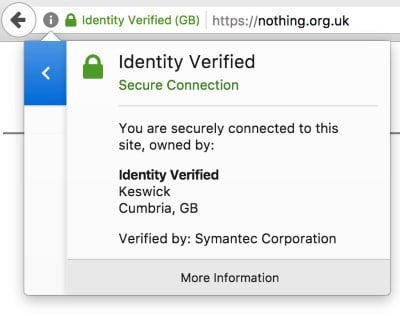
When a website installs an Extended Validation certificate, visitors using compatible browsers receive visual cues that confirm the site belongs to a legitimately verified legal entity. This includes the display of the company name in the browser address bar (in older browsers) and trust indicators that assure users the site has passed rigorous identity checks. The result is a significant lift in user confidence — particularly on pages where sensitive data is exchanged, such as checkout pages, login portals, and financial dashboards.
Symantec was a pioneer in the EV SSL space. Before DigiCert acquired Symantec’s Website Security business in 2017, Symantec EV certificates were among the most widely trusted and deployed certificates on the internet. Today, those certificates and the infrastructure behind them continue under DigiCert’s management, but the Symantec brand and its legacy in the EV certificate market remain highly relevant for IT professionals, webmasters, and security researchers alike.
“Extended Validation certificates represent the gold standard of website identity assurance.” — CA/Browser Forum Guidelines
The History Behind Symantec EV SSL Certificates
To fully understand the value of a Symantec EV SSL certificate, it helps to trace the company’s journey in the SSL market. Symantec entered the certificate authority space by acquiring VeriSign’s authentication business in 2010 for approximately $1.28 billion. At the time, VeriSign was the dominant player in SSL certificates globally — and with that acquisition, Symantec inherited one of the internet’s most trusted root certificate stores.
For nearly seven years, Symantec operated as one of the largest and most influential certificate authorities (CAs) in the world. Their EV certificates were used by Fortune 500 companies, major banks, healthcare organizations, and e-commerce platforms. In 2017, however, Google raised concerns about Symantec’s certificate issuance practices, citing instances of improperly issued certificates. This led to a landmark agreement where Symantec divested its CA business to DigiCert in October 2017.
Suggested read: Symantec EV SSL Certificate: Everything You Need to Know Before Securing Your Website
The transition was significant for the industry, but it did not diminish the underlying quality of the Symantec EV certificate product. DigiCert honored existing Symantec certificate holders and maintained backward compatibility, ensuring that organizations with active Symantec EV certificates experienced minimal disruption.
How Does a Symantec EV Certificate Work?
Understanding the mechanics behind a Symantec EV certificate reveals why it carries so much authority in the cybersecurity world. The process involves several layers of verification that go well beyond what Domain Validation (DV) or Organization Validation (OV) certificates require.
The Extended Validation Verification Process
The CA/Browser Forum, an industry body that sets standards for SSL certificates, defines strict requirements for EV issuance. Here’s how the verification process typically unfolds:
- Legal existence check — The certificate authority confirms the applicant is a legally registered entity in its country or jurisdiction.
- Operational existence — The CA verifies the organization has been in operation for at least three years or has a verified business presence.
- Physical address verification — The organization’s address is confirmed through official government or third-party databases.
- Domain ownership confirmation — The applicant must prove ownership of the domain for which the certificate is requested.
- Telephone verification — A verified phone number listed in a third-party directory must be used to contact the organization and confirm the certificate request.
- Authorization confirmation — The CA confirms that the individual requesting the certificate is authorized to do so on behalf of the organization.
This multi-step process typically takes 2–7 business days, compared to minutes for DV certificates. The rigor of this process is precisely what makes EV certificates command a premium price point and higher trust level.
What Happens on the Browser Side?
Once installed, the Symantec EV certificate triggers specific trust indicators in the browser. In older versions of Chrome and Firefox (pre-2019), this included a green address bar with the company name. Modern browsers like Chrome 77+ removed the green bar as a default display element, but EV certificates still provide:
- A padlock icon in the address bar
- Access to verified organization details by clicking the padlock
- Higher trust scores in enterprise security tools and web application firewalls
- No “Not Secure” warnings for HTTPS-enforced connections
Symantec EV Certificate vs. DV and OV Certificates
A common question among IT managers and website owners is: how does a Symantec EV certificate compare to other certificate types? The table below breaks it down clearly.
Suggested read: UTI Certificate: Everything You Need to Know About Digital Signature Certificates from UTIITSL
| Feature | DV Certificate | OV Certificate | EV Certificate (Symantec) |
|---|---|---|---|
| Identity Verification | Domain only | Organization details | Full legal + operational verification |
| Issuance Time | Minutes | 1–3 days | 2–7 days |
| Browser Trust Indicators | Padlock only | Padlock + org info | Padlock + verified org details |
| Ideal Use Case | Blogs, personal sites | Business websites | E-commerce, banking, enterprise |
| Price Range | Free – $50/yr | $50 – $200/yr | $200 – $1,000+/yr |
| Phishing Deterrence | Low | Moderate | High |
| CA/Browser Forum Compliance | Basic | Standard | Highest Level |
As the table illustrates, the Symantec EV certificate occupies the highest tier of SSL assurance. For organizations that process payments, handle medical records, or manage sensitive user accounts, EV is not just a nice-to-have — it is a security and compliance necessity.
Key Benefits of Using a Symantec EV Certificate
1. Maximum Identity Assurance
The most powerful benefit of a Symantec EV certificate is that it proves your organization is who it claims to be. In an era of sophisticated phishing attacks — which increased by 61% in 2022 according to SlashNext’s State of Phishing Report — having a certificate that confirms your legal identity is an invaluable layer of protection for your users.
Cybercriminals can obtain free DV certificates in minutes and create convincing lookalike sites. But they cannot pass the rigorous EV verification process. This creates a meaningful barrier between your users and fraudulent impersonators.
2. Increased User Trust and Conversion Rates
Research consistently links visible security signals to improved user behavior on websites. According to a study by the Baymard Institute, 17% of users have abandoned an online purchase specifically because they didn’t trust the site with their credit card information. EV certificates provide the trust signals that address this concern head-on.
E-commerce platforms that deployed EV SSL certificates reported measurable lifts in checkout completion rates, particularly among first-time customers who have no prior relationship with the brand.
3. Regulatory and Compliance Support
Industries governed by regulations such as PCI DSS (Payment Card Industry Data Security Standard), HIPAA, and GDPR often list strong authentication and encryption requirements among their mandates. While EV certificates are not mandated by name in every regulation, their verification standards align closely with the spirit of these requirements, making them a preferred choice among compliance officers and auditors.
Suggested read: CIT Certificate: Everything You Need to Know About Corporate Income Tax Certification in 2026
4. Better Resistance to Phishing
Because EV certificate issuance requires confirmed legal identity, they are extremely difficult for bad actors to obtain fraudulently. This makes EV certificates a recommended standard for financial institutions, healthcare organizations, and any business in a high-fraud industry.
5. Long-Standing Brand Credibility
The Symantec name itself carries significant weight in enterprise cybersecurity. Organizations that have used Symantec EV certificates (now managed by DigiCert) benefit from the legacy trust associated with one of the most recognized names in internet security. That brand equity translates into faster user trust, particularly among enterprise buyers and tech-savvy audiences.
Who Should Use a Symantec EV Certificate?
Not every website requires an EV certificate, but for certain use cases, it is the clearly superior option. Here’s a breakdown of organizations that benefit most:
Financial Institutions and Banks — Any online banking platform, credit union portal, or fintech application should deploy an EV certificate. The level of identity assurance it provides directly protects account holders from phishing and man-in-the-middle attacks.
E-Commerce Stores — Online retailers handling credit card transactions, especially those that are not operating under a widely recognized brand, use EV certificates to signal legitimacy to first-time shoppers.
Healthcare Portals — Patient-facing portals, telehealth platforms, and electronic health record (EHR) systems that transmit protected health information (PHI) benefit greatly from EV-level identity verification.
Government and Public Sector Websites — Citizens accessing government services online expect the highest level of security. EV certificates communicate that the site is an official, legally verified entity.
Suggested read: ITDS Certification: Everything You Need to Know About Becoming an Infant Toddler Developmental Specialist
SaaS Platforms and Enterprise Software — B2B software providers that handle enterprise data often face security questionnaires from procurement teams. Having an EV certificate can expedite vendor security approvals.
Legal and Professional Services Firms — Law firms, accounting firms, and consulting companies dealing with confidential client information use EV certificates to demonstrate their commitment to data security.
Case Study: How EV Certificates Impact Consumer Trust
A widely cited 2015 study by Econsultancy and GlobalSign examined the effect of EV SSL indicators on user trust across e-commerce sites. The research found:
- 84% of users said they would abandon a purchase if data was sent over an insecure connection.
- 76% of respondents felt more confident completing transactions on sites that displayed EV trust indicators.
- Companies that added EV SSL reported a 23% increase in checkout conversion rates compared to control groups using only DV certificates.
While this study predates Chrome’s removal of the green EV bar, the underlying principle holds: visible, verifiable security signals directly influence purchasing decisions. Today, even without the green bar, EV certificate details are one click away in any modern browser, and enterprise users and security-conscious consumers know how to look for them.
Symantec EV Certificate and SEO: Does It Impact Rankings?
This is a question many webmasters ask. The relationship between SSL certificates and SEO is well-established — Google confirmed HTTPS as a ranking signal back in 2014. But does an EV certificate provide additional SEO advantages over a standard DV or OV cert?
The answer is nuanced. From a raw ranking signal perspective, Google does not distinguish between EV, OV, and DV certificates. Any valid HTTPS certificate contributes equally to the HTTPS ranking signal. However, the indirect SEO benefits of a Symantec EV certificate are meaningful:
Suggested read: SPAB Certification: Everything You Need to Know About School Pupil Activity Bus Certification in California
- Lower bounce rates — Users who trust your site stay longer. Lower bounce rates signal quality content to Google.
- Higher conversion rates — More on-site conversions lead to better engagement metrics, which influence rankings over time.
- Reduced site abandonment — Users who feel secure are more likely to complete forms, subscribe, or engage with content, all of which send positive signals to search engines.
- Brand credibility — High-trust brands attract more natural backlinks, which remain one of the most powerful ranking factors in Google’s algorithm.
So while a Symantec EV certificate won’t directly boost your keyword rankings overnight, it contributes to a trust ecosystem that supports long-term SEO growth.
How to Get a Symantec EV Certificate (Now Issued by DigiCert)
Since Symantec’s CA business was acquired by DigiCert in 2017, Symantec EV certificates are now issued through DigiCert’s infrastructure while honoring the Symantec trust chain. Here’s the process for obtaining one:
Step 1: Gather Your Organization Documentation
Before applying, collect the following:
- Certificate of Incorporation or equivalent legal document
- Business registration number
- Verified business address
- Authorized signatory details
- Verified business phone number (listed in a public directory)
Step 2: Submit Your Certificate Signing Request (CSR)
Generate a CSR from your web server. This cryptographic file contains your domain information and public key, and it’s required to initiate the certificate issuance process.
Step 3: Complete Identity Verification
DigiCert’s validation team will contact your organization using the publicly listed phone number to verify the certificate request. You’ll also need to sign a subscriber agreement confirming the accuracy of your information.
Step 4: Install the Certificate
Once issued, your EV certificate will need to be installed on your web server. DigiCert provides installation guides for Apache, Nginx, IIS, and most major server environments. After installation, verify the certificate is functioning correctly using an SSL checker tool.
Suggested read: Peptide Certification: Everything You Need to Know Before You Start
Step 5: Maintain and Renew
EV certificates are issued with a maximum validity of 397 days (since September 2020, per CA/Browser Forum requirements). Set renewal reminders at least 30 days before expiry to avoid lapses.
Common Mistakes to Avoid with EV SSL Certificates
Letting the certificate expire — An expired EV certificate is just as harmful as having no certificate at all. Browsers display alarming “Your connection is not private” warnings, immediately destroying user trust. Set automated renewal reminders.
Installing on the wrong server — EV certificates are domain-specific. Installing on a subdomain or secondary domain that wasn’t included in the original request will result in certificate errors.
Ignoring mixed content warnings — Even with an EV certificate installed, loading HTTP resources (images, scripts, stylesheets) on an HTTPS page triggers mixed content warnings. Audit your site with tools like Why No Padlock to identify and fix these issues.
Purchasing the wrong certificate type — Multi-domain EV certificates (also called EV SAN certificates) cover multiple domains under one certificate. If your organization operates several web properties, this is more efficient than buying individual certificates for each domain.
Skipping the verification process prep — The EV verification process requires your business to be findable through public directories. If your phone number isn’t listed publicly, verification will stall. Update your DUNS number and business directories before applying.
Symantec EV Certificate Pricing: What to Expect
EV certificates come at a premium compared to DV or OV options. Here’s a general pricing landscape for reference:
Suggested read: Copado Certification: Everything You Need to Know to Get Certified in 2024
| Provider | Product Name | Annual Cost (Approx.) |
|---|---|---|
| DigiCert (Symantec Legacy) | EV SSL | $344 – $995/yr |
| Sectigo | EV SSL | $199 – $499/yr |
| GlobalSign | EV SSL | $249 – $599/yr |
| Entrust | EV SSL | $249 – $699/yr |
Note: Pricing varies based on the number of domains, warranty amount, and support level. Enterprise contracts typically include volume discounts.
The higher price reflects the manual verification labor involved in EV issuance and the greater liability warranty that comes with these certificates. Most Symantec EV certificates (issued via DigiCert) include a $1.75 million warranty, which protects against losses resulting from certificate misuse.
Symantec EV Certificate and the CA/Browser Forum Standards
The CA/Browser Forum is the governing body that sets the standards all certificate authorities must follow. Their Baseline Requirements and EV Guidelines dictate how EV certificates must be issued, managed, and revoked.
Symantec — and now DigiCert operating Symantec’s infrastructure — is a member of the CA/Browser Forum and adheres to these guidelines. Key requirements include:
- Maximum validity period of 397 days for all certificates (reduced from 825 days in 2019)
- Certificate Transparency (CT) logging — All EV certificates must be logged in publicly auditable CT logs
- OCSP stapling support — Certificates must support Online Certificate Status Protocol for real-time revocation checking
- Strong key requirements — Minimum 2048-bit RSA keys or 256-bit ECDSA keys
These requirements ensure that EV certificates maintain their integrity as the highest-assurance option in the SSL ecosystem.
📎 Source: For the official CA/Browser Forum EV Guidelines, visit cabforum.org
Suggested read: Dream Catchers Hair Extension Certification: Everything You Need to Know Before You Enroll
Internal Resource
If you’re exploring your options beyond standalone EV certificates and want to understand broader deployment scenarios, check out our detailed breakdown on Symantec EV SSL certificate configurations for multi-domain and wildcard environments — covering everything from CSR generation to server-specific installation steps.
Frequently Asked Questions About Symantec EV Certificates
What is a Symantec EV certificate used for?
A Symantec EV certificate is used to establish the highest level of identity verification for a website. It confirms that the site is operated by a legally registered organization that has passed rigorous vetting by a certificate authority. It is most commonly used by banks, e-commerce stores, healthcare portals, and enterprise websites.
Is a Symantec EV certificate still valid today?
Yes. While Symantec’s Certificate Authority business was acquired by DigiCert in 2017, EV certificates issued under the Symantec brand — or issued through DigiCert’s Symantec-compatible infrastructure — remain valid and trusted by all major browsers as long as they are within their validity period.
How long does it take to get a Symantec EV certificate?
The issuance process for a Symantec EV certificate typically takes 2 to 7 business days, depending on how quickly your organization completes the verification steps and how readily available your business information is in public directories.
Can I get a Symantec EV certificate for a subdomain?
EV certificates can cover subdomains, but each subdomain must be explicitly listed in the certificate request. Wildcard EV certificates (which would cover all subdomains) are not permitted under CA/Browser Forum EV Guidelines.
Does a Symantec EV certificate improve Google rankings?
A Symantec EV certificate provides the same HTTPS ranking signal to Google as any other valid SSL certificate. It does not provide a direct ranking advantage over DV or OV certificates, but it can improve indirect SEO metrics such as bounce rate, time on site, and conversion rates — all of which support better long-term rankings.
Suggested read: How to Verify SOC 2 Certification: Everything You Need to Know Before Trusting a Vendor
What warranty comes with a Symantec EV certificate?
Most Symantec EV certificates (now issued by DigiCert) include a $1.75 million warranty, which provides financial protection against losses resulting from certificate misuse or CA-related errors.
How do I know if a website has an EV certificate?
Click the padlock icon in your browser’s address bar. In the certificate details, look for the “Subject” section. An EV certificate will list the verified organization name, country, and locality — not just the domain name, as DV certificates do.
What happened to Symantec SSL certificates after the DigiCert acquisition?
After DigiCert acquired Symantec’s Website Security and related PKI solutions in October 2017, DigiCert took over issuance, management, and support of all Symantec certificate products. Existing customers were migrated, and Symantec EV certificates continued to be honored by browsers during their validity periods.
Ready to Secure Your Website with an EV Certificate?
If you’re serious about protecting your users and building long-term trust online, a Symantec EV certificate — now available through DigiCert — is the industry’s gold standard in identity assurance and encryption. Don’t let your users second-guess whether your site is legitimate.
Get your Symantec EV certificate today and give your visitors the verified trust signals they deserve. Whether you’re running an e-commerce store, a financial platform, or an enterprise SaaS product, EV SSL is the clearest signal that your organization takes security seriously.
Citation: CA/Browser Forum EV SSL Certificate Guidelines — cabforum.org/extended-validation | DigiCert Symantec Certificate Center — digicert.com