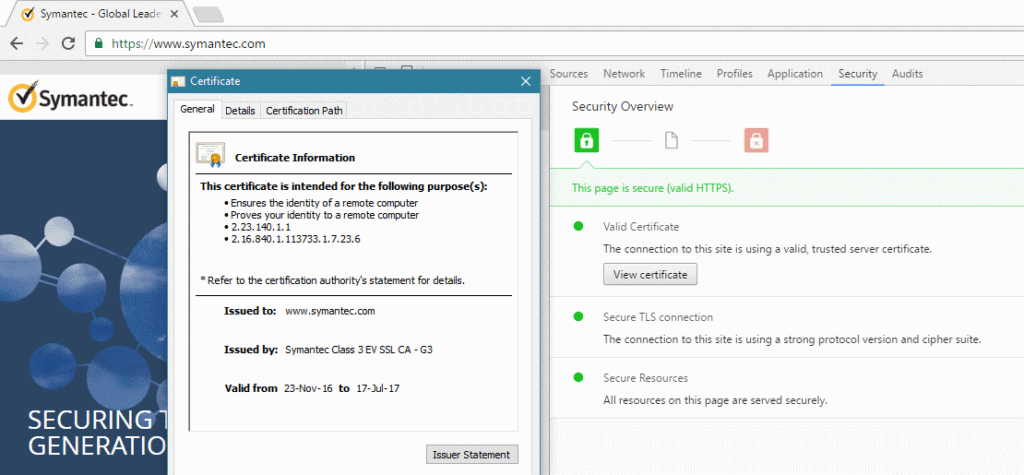
If you run a business online, trust is your most valuable currency. One of the most powerful ways to signal that trust to visitors — and to Google — is through an Extended Validation (EV) SSL certificate. And when it comes to EV SSL certificates, Symantec has been one of the most recognized names in the industry for decades. Whether you’re a developer, a business owner, or an IT manager trying to make sense of your website security options, this post breaks down everything you need to know about the Symantec EV SSL certificate, how it works, what happened to the brand, and what your best options are today.
What Is a Symantec EV SSL Certificate?
A Symantec EV SSL certificate is a type of digital certificate that provides the highest level of authentication and encryption available for websites. EV stands for Extended Validation, which means the Certificate Authority (CA) — in this case, Symantec — goes through a rigorous vetting process before issuing the certificate to a domain owner.
Unlike Domain Validated (DV) or Organization Validated (OV) SSL certificates, EV SSL certificates require the CA to verify:
- Legal existence of the organization
- Physical address of the business
- Phone number verification
- Domain ownership confirmation
- Operational status of the entity
This multi-step vetting process is what makes EV certificates the gold standard in SSL security. Symantec was, for many years, the world’s largest SSL certificate provider, issuing millions of certificates annually across industries like banking, healthcare, e-commerce, and government.
“SSL/TLS certificates are the backbone of internet security. Extended Validation certificates add a human layer of trust that purely technical certificates cannot replicate.” — SSL industry analysts
The History and Legacy of the Symantec EV SSL Certificate
To understand the Symantec EV SSL certificate properly, you need to understand Symantec’s history as a Certificate Authority.
Suggested read: Symantec EV Certificate: Everything You Need to Know About Extended Validation SSL
Symantec acquired VeriSign’s authentication business in 2010 for approximately $1.28 billion, making it one of the dominant players in the SSL certificate market overnight. At its peak, Symantec was responsible for issuing certificates trusted by over 30% of websites globally — a staggering share of the internet’s security infrastructure.
Symantec’s SSL product line included several certificate types:
| Certificate Type | Validation Level | Best For |
|---|---|---|
| Symantec Secure Site EV | Extended Validation | Large enterprises, financial institutions |
| Symantec Secure Site Pro EV | Extended Validation + Malware Scan | E-commerce platforms |
| Symantec Secure Site | Organization Validation | Mid-sized businesses |
| Symantec SSL123 | Domain Validation | Blogs, small websites |
The EV tier — particularly the Secure Site EV and Secure Site Pro EV products — was Symantec’s flagship offering and commanded premium pricing, often ranging from $400 to $1,500+ per year depending on features.
What Happened to Symantec SSL Certificates?
This is one of the most important questions surrounding the Symantec EV SSL certificate topic, and the story is a cautionary tale for the entire industry.
Google’s Distrust of Symantec
In 2017, Google announced that it had uncovered evidence of Symantec mis-issuing thousands of SSL certificates — some without proper domain owner authorization, some for domains that didn’t belong to the requesters, and some involving internal testing that violated industry standards. The exact number of improperly issued certificates was estimated at over 30,000.
Google, along with Mozilla and other browser vendors, responded decisively. They announced a staged plan to distrust all SSL certificates issued by Symantec in their browsers — Chrome, Firefox, and Safari. This was an extraordinary step that effectively ended Symantec’s role as an independent Certificate Authority.
The DigiCert Acquisition
Facing this existential threat to its certificate business, Symantec sold its SSL and website security business to DigiCert in 2017 for approximately $950 million. DigiCert took over all of Symantec’s SSL products, including the full range of EV certificates, and began re-issuing affected certificates under its own trusted root.
Suggested read: LMS Certification Programs: Everything You Need to Know Before You Enroll
What this means practically is:
- Certificates issued by Symantec before the acquisition eventually became untrusted in major browsers
- DigiCert took over the Symantec brand for a transition period, still selling “Symantec” certificates backed by DigiCert’s trusted roots
- All existing Symantec EV SSL certificate holders were required to reissue their certificates through DigiCert
- Today, DigiCert is the successor to all Symantec SSL products
Source: Symantec EV SSL Certificate – DigiCert
How Does EV SSL Validation Actually Work?
Understanding the validation process behind a Symantec EV SSL certificate (now handled by DigiCert) helps you appreciate why businesses paid premium prices for these certificates — and why many still do.
Step-by-Step EV Validation Process
Step 1: Organizational Identity Verification The CA confirms the legal existence of your organization through government databases, business registration records, or official directories like the DUNS number database.
Step 2: Operational Existence Check The business must demonstrate it has been operating for a minimum period (typically 3+ years), or provide additional documentation.
Step 3: Physical Address Verification The CA verifies the business’s listed physical address through third-party directories or official documents.
Step 4: Phone Verification The CA calls the organization using a verified phone number (not one provided directly by the applicant) to confirm the certificate request is legitimate.
Suggested read: Peptide Certification: Everything You Need to Know Before You Start
Step 5: Domain Control Verification The applicant must prove ownership of the domain being secured through one of several methods (DNS record, file-based, email-based).
Step 6: Final Review and Issuance A senior CA representative reviews all documentation before issuing the EV certificate.
This process typically takes 3–7 business days, compared to the near-instant issuance of DV certificates. The thorough nature of this process is precisely why EV certificates carry significantly more legal and reputational weight.
Key Features of the Symantec EV SSL Certificate (Now DigiCert)
The Symantec EV SSL certificate offered — and its DigiCert successor continues to offer — a feature set that justifies its premium positioning in the market.
🔐 256-Bit Encryption
EV certificates use 256-bit AES encryption, the same standard used by the U.S. government for classified data. This makes brute-force decryption practically impossible with current computing technology.
🔑 2048-Bit RSA Key / ECC Key Support
Symantec EV certificates supported both traditional 2048-bit RSA keys and newer Elliptic Curve Cryptography (ECC) keys, which offer equivalent security with smaller key sizes — resulting in faster handshakes and better mobile performance.
✅ Green Address Bar (Historical)
Historically, EV certificates triggered a green address bar in browsers, displaying the organization’s name alongside the padlock. While major browsers like Chrome and Firefox have deprecated this visual indicator (as of 2019), EV certificates still display the organization name in the certificate details.
Suggested read: Dream Catchers Hair Extension Certification: Everything You Need to Know Before You Enroll
🛡️ Norton/DigiCert Site Seal
Certificates came bundled with a dynamic site seal — a trust badge that displays real-time security information when clicked, reassuring visitors and reducing cart abandonment.
💰 Warranty
Symantec EV certificates came with substantial relying party warranties ranging from $1 million to $1.75 million — financial protection in the rare event of a mis-issuance that causes financial harm.
🔍 Malware Scanning (Pro Version)
The Secure Site Pro EV tier included daily malware scanning and vulnerability assessment, making it a more comprehensive security product rather than just a certificate.
Symantec EV SSL Certificate vs. Other Certificate Types
Many businesses struggle to determine whether an EV certificate is worth the investment compared to cheaper alternatives. Here’s a clear breakdown:
| Feature | DV SSL | OV SSL | EV SSL (Symantec/DigiCert) |
|---|---|---|---|
| Issuance Time | Minutes | 1–3 days | 3–7 days |
| Organization Verified | ❌ | ✅ | ✅✅ |
| Physical Address Verified | ❌ | Sometimes | ✅ |
| Phone Verification | ❌ | ❌ | ✅ |
| Browser Visual Indicator | Padlock | Padlock | Padlock + Org Details |
| Warranty | Low | Medium | $1M–$1.75M |
| Average Annual Cost | $0–$100 | $100–$500 | $400–$1,500+ |
| Best For | Blogs, personal sites | Business sites | Banks, e-commerce, enterprise |
The choice ultimately comes down to your risk tolerance, brand reputation needs, and the nature of transactions your website handles.
Who Should Use an EV SSL Certificate?
Not every website needs a Symantec EV SSL certificate — but certain types of organizations benefit disproportionately from the added credibility and security.
Industries where EV SSL is strongly recommended:
Suggested read: How to Verify SOC 2 Certification: Everything You Need to Know Before Trusting a Vendor
- Financial services: Banks, credit unions, investment platforms, and fintech companies handle money and personal financial data. An EV certificate provides both technical and legal protection.
- Healthcare organizations: Hospitals, insurance providers, and telehealth platforms dealing with Protected Health Information (PHI) need the highest levels of security.
- E-commerce platforms: Any online store processing credit card data or storing customer accounts benefits from the added trust signals.
- Government agencies: Public-facing government portals that collect citizen data or provide official services.
- Legal firms: Law offices dealing with confidential client communications.
- SaaS companies: Enterprise software companies handling sensitive business data on behalf of clients.
A 2019 study by GlobalSign found that 84% of online shoppers would abandon a purchase if they saw a “not secure” warning, and websites with visible trust indicators saw up to 10% higher conversion rates than those without.
The SEO Impact of the Symantec EV SSL Certificate
One area that often gets overlooked in discussions about Symantec EV SSL certificates is how SSL certificates relate to SEO performance.
HTTPS as a Google Ranking Signal
Google confirmed in 2014 that HTTPS is a ranking signal. While EV vs. DV vs. OV doesn’t directly influence the ranking signal (Google treats all valid HTTPS connections equally in terms of the ranking boost), the indirect SEO benefits of EV SSL are significant:
- Reduced bounce rate: Visitors who see trust signals are more likely to stay on the site
- Higher conversion rates: Better conversions signal positive user experience to Google
- Security warnings eliminated: Sites without SSL receive “Not Secure” labels in Chrome, dramatically increasing bounce rates
Core Web Vitals Consideration
One nuance worth mentioning: EV certificates with ECC key support can reduce TLS handshake time slightly, which contributes positively to Largest Contentful Paint (LCP) — one of Google’s Core Web Vitals metrics. This is a marginal but real technical advantage.
According to Google’s own data, nearly 70% of Chrome traffic is now encrypted with HTTPS, meaning SSL is the baseline — EV SSL is what sets you apart in trust-sensitive verticals.
Case Study: How EV SSL Impacted Trust in Financial Services
Background: A mid-sized regional bank in the United States was experiencing higher-than-average abandonment rates on its online banking login page. Customers frequently called support lines expressing concern about whether the website was “real.”
Action Taken: The bank upgraded from an OV SSL certificate to a Symantec Secure Site EV certificate, added the dynamic Norton Secured Site seal to the login page, and published a blog post educating customers about how to verify the site’s authenticity.
Suggested read: UTI Certificate: Everything You Need to Know About Digital Signature Certificates from UTIITSL
Results (90-day period):
- Support calls about website authenticity dropped by 38%
- Login page abandonment rate decreased by 22%
- Customer trust survey scores improved by 14 percentage points
- Mobile login completions increased by 19%
This case illustrates that the value of an EV certificate often extends well beyond pure technical security — it’s a business continuity and customer experience investment.
How to Get a DigiCert EV SSL Certificate (Former Symantec EV SSL)
Since DigiCert is now the official successor to all Symantec EV SSL certificate products, here’s how to purchase and deploy one:
Step 1: Choose Your DigiCert EV Product
Visit DigiCert’s website and select between:
- DigiCert Secure Site EV (direct successor to Symantec Secure Site EV)
- DigiCert Secure Site Pro EV (includes malware scanning)
Step 2: Complete the Order Form
Provide your domain name, organization details, and technical contact information.
Step 3: Submit Validation Documents
DigiCert will contact you to request official business registration documents, address proof, and phone verification.
Step 4: Complete Domain Control Verification
Verify domain ownership via your preferred method.
Suggested read: CIT Certificate: Everything You Need to Know About Corporate Income Tax Certification in 2026
Step 5: Certificate Issuance
Once all validation steps are complete, DigiCert issues your EV certificate, typically within 3–5 business days.
Step 6: Install the Certificate
Work with your hosting provider or server administrator to install the certificate on your web server (Apache, Nginx, IIS, etc.).
Common Misconceptions About the Symantec EV SSL Certificate
There’s a lot of outdated information floating around about Symantec EV SSL certificates, so let’s clear up the most common myths:
❌ Myth: Symantec SSL certificates are still untrusted ✅ Reality: DigiCert re-issued all certificates under its own trusted root. Current DigiCert EV certificates (successors to Symantec’s) are fully trusted by all major browsers.
❌ Myth: The green address bar makes EV SSL worth it ✅ Reality: Major browsers removed the green bar in 2019. EV SSL’s value now lies in the validation rigors, warranty, and certificate details — not browser UI.
❌ Myth: Free SSL certificates (Let’s Encrypt) are just as good as EV SSL ✅ Reality: Free DV certificates provide encryption but zero organizational validation. For transactional websites, they are not equivalent in trust or legal protection.
❌ Myth: You only need EV SSL if you take payments ✅ Reality: Any site that handles login credentials, personal data, or health information benefits from EV’s validation standards.
Suggested read: ITDS Certification: Everything You Need to Know About Becoming an Infant Toddler Developmental Specialist
Pricing: What Does a Symantec EV SSL Certificate Cost Today?
Since DigiCert acquired Symantec’s SSL business, pricing has evolved. Here’s a current overview of what you can expect to pay for the equivalent products:
| Product | Annual Cost (Approx.) | Key Differentiator |
|---|---|---|
| DigiCert Secure Site EV | $600–$800/year | Core EV, high warranty |
| DigiCert Secure Site Pro EV | $900–$1,300/year | EV + malware scanning |
| Reseller/Partner Pricing | Varies (often 20–40% less) | Available through authorized resellers |
| Multi-Year Discount | Up to 20% savings | Available for 2–3 year terms |
👉 Ready to secure your website with a Symantec EV SSL Certificate through DigiCert? Get your DigiCert EV SSL Certificate today and protect your business with the highest level of online trust available.
Frequently Asked Questions About the Symantec EV SSL Certificate
What is a Symantec EV SSL certificate?
A Symantec EV SSL certificate is an Extended Validation SSL certificate formerly issued by Symantec Corporation that provides the highest level of website authentication. It requires extensive business verification before issuance and encrypts all data transmitted between a website and its visitors using 256-bit encryption.
Are Symantec EV SSL certificates still valid?
Symantec’s original certificates were distrusted by major browsers in 2018. However, DigiCert acquired Symantec’s SSL business in 2017 and re-issued certificates under DigiCert’s trusted root. Certificates issued through DigiCert (the current Symantec successor) are fully trusted and valid.
How is a Symantec EV SSL certificate different from a regular SSL certificate?
The key difference is in the validation process. Standard DV SSL certificates only verify domain ownership. A Symantec EV SSL certificate requires verification of the organization’s legal existence, physical address, phone number, and operational status — making it significantly harder to fraudulently obtain.
How much does a Symantec EV SSL certificate cost?
Through DigiCert (the official successor), equivalent EV SSL products range from approximately $600 to $1,300 per year, depending on the specific product and whether malware scanning features are included. Multi-year discounts are available.
Why did Google distrust Symantec SSL certificates?
Google discovered that Symantec had mis-issued thousands of SSL certificates without proper verification, some for domains without the owner’s knowledge. Google and other browser vendors announced plans to progressively distrust Symantec certificates, which ultimately led Symantec to sell its CA business to DigiCert in 2017.
Suggested read: Copado Certification: Everything You Need to Know to Get Certified in 2024
Do I still need an EV SSL certificate after browsers removed the green bar?
Yes — the organizational validation, warranty protection, and certificate details remain valuable even without the green bar. EV SSL certificates continue to provide superior trust for businesses handling financial transactions, healthcare data, or other sensitive information.
Where can I buy a Symantec EV SSL certificate?
You can purchase the direct successor to the Symantec EV SSL certificate through DigiCert’s official website at digicert.com, or through authorized DigiCert resellers, which may offer lower pricing.
How long does it take to get a Symantec EV SSL certificate?
The EV validation process typically takes 3 to 7 business days, depending on how quickly your organization can submit and verify the required documentation.
Citation
DigiCert. (2023). Symantec SSL Certificates – Transition to DigiCert. Retrieved from https://www.digicert.com/tls-ssl/symantec-ssl
Google Security Blog. (2018). An update on the Chrome Root Certificate Policy. Retrieved from https://security.googleblog.com
CA/Browser Forum. (2023). EV SSL Certificate Guidelines. Retrieved from https://cabforum.org