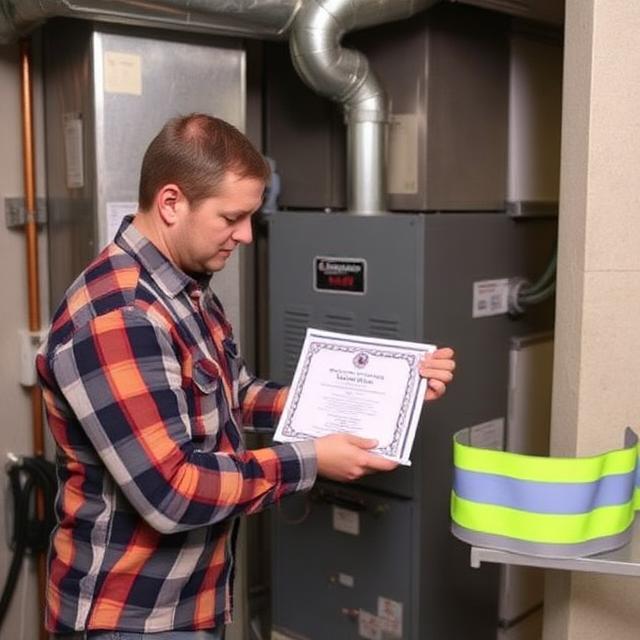
Whether you’re a homeowner trying to make sense of your new heating system’s paperwork, or an HVAC technician looking to advance your career, furnace certification is one of those terms that touches nearly every corner of the heating industry. It refers to two distinct but equally important concepts: the safety and efficiency certifications that furnace units themselves must carry, and the professional credentials that technicians must earn before legally and competently working on those systems.
Understanding how furnace certification works — from the regulatory standards that govern manufacturers to the exam pathways that technicians must complete — can directly impact your home’s safety, your energy bills, and the quality of service you receive. This article breaks it all down in plain language so you walk away knowing exactly what to look for, what to ask, and what to expect.
What Is Furnace Certification and Why Does It Matter?
Furnace certification is a formal process through which a heating unit — or an HVAC technician — is evaluated against established national and industry standards to verify safety, performance, and energy efficiency. For residential and commercial furnaces, this means passing rigorous testing before a product is ever allowed on the market. For HVAC professionals, it means demonstrating hands-on competency through standardized exams and continuing education.
Why does this matter so much? Because a furnace that isn’t properly certified could:
- Produce dangerous levels of carbon monoxide (CO) inside your home
- Operate at a lower efficiency than advertised, costing you hundreds of dollars more per year
- Fail building code inspections and void your homeowner’s insurance
- Pose fire hazards due to substandard components or venting systems
The stakes are equally high on the technician side. An uncertified or undertrained HVAC technician might improperly install or service your furnace, creating all of the above risks while also violating federal and state regulations. Furnace certification — in both senses — exists to protect people, property, and the environment.
“The HVACR industry is increasingly dynamic with challenging labor markets and changing regulation. The importance of professional certification has never been greater.” — NATE (North American Technician Excellence)
The Two Main Types of Furnace Certification
It helps to think about furnace certification in two separate lanes:
| Type | Who It Applies To | Key Organizations |
|---|---|---|
| Equipment/Product Certification | Furnace manufacturers | ANSI, CSA, UL, DOE, EPA/ENERGY STAR |
| Technician/Professional Certification | HVAC service and installation pros | NATE, EPA 608, AHRI, state licensing boards |
Both lanes intersect in your home. When a certified technician installs a certified furnace, you get the safest, most efficient, and most code-compliant heating possible. Let’s dig into each one in detail.
Equipment Furnace Certification: Standards Every Unit Must Meet
ANSI Z21.47 — The Foundation Standard for Gas Furnace Certification
The primary benchmark for gas furnace certification in the United States and Canada is ANSI Z21.47 / CSA 2.3, commonly known as the “Gas-Fired Central Furnaces” standard. This standard applies to automatically operating gas-fired central furnaces for installation in residential, commercial, and industrial structures, including furnaces for direct vent, recreational vehicle, outdoor, and manufactured (mobile) homes. These furnaces may include a cooling unit, and all units are to be constructed entirely of new, unused parts and materials.
Suggested read: Honda Certification Training: Everything Technicians Need to Know to Advance Their Automotive Career
In Canada, this Standard applies to gas-fired central furnaces having inputs up to and including 400,000 Btu/hr (117,228 W). It applies to Category I, Category II, Category III, and Category IV Central Furnaces.
This standard has been in active development for decades. The requirements for gas-fired central furnaces were initially included in ANSI Z21.13, before becoming a separate standard in 1964. From 1978 through 1993, a separate standard for direct vent central furnaces (ANSI Z21.64) was in place before being consolidated into a single standard and harmonized with Canadian standard requirements in 1993, with the latest edition of ANSI Z21.47 published in 2021.
Key construction and safety requirements under ANSI Z21.47 include:
- Carbon Monoxide Limits: All three ANSI standards have the following relevant requirements for gas furnaces and boilers: must not produce CO in excess of 400 ppm under prescribed laboratory test conditions.
- Blocked vent and intake switches
- Draft hood spill switches
- Flame roll-out switches
- Altitude provisions for furnaces designed to operate above 2,000 ft (610 m)
A review of all Listing Reports is necessary to determine which products comply with new/revised requirements and which products will require re-evaluation. This is standard practice every time a new edition of ANSI Z21.47 is released, ensuring all products on the market reflect the latest safety knowledge.
UL 727 — Oil Furnace Certification
Oil-fired warm air furnaces are evaluated under UL 727, a standard administered by Underwriters Laboratories. This certification framework establishes minimum construction and performance benchmarks for oil furnaces, and like ANSI Z21.47, it is updated regularly to reflect new engineering knowledge and field incident data.
How Furnace Manufacturers Obtain Certified Listings
Manufacturers don’t simply claim compliance — they must submit their products to a Nationally Recognized Testing Laboratory (NRTL) such as Intertek, UL, or CSA Group. The NRTL conducts the required tests, reviews the product design, and issues a Listing Report if the furnace passes. That listed product may then carry the NRTL’s certification mark (the UL mark, ETL mark, CSA mark, etc.).
Effective immediately upon a standard revision, the revised standard will be exclusively used for evaluation of new products unless the applicant requests in writing that current requirements be used, along with their understanding that their listings will be withdrawn on the effective date unless the product is found to comply with new/revised requirements.
ENERGY STAR Furnace Certification: Efficiency Above and Beyond the Minimum
Beyond safety, one of the most recognized forms of furnace certification in the consumer market is the ENERGY STAR label, administered by the U.S. Environmental Protection Agency (EPA). While federal minimum standards set the floor, ENERGY STAR certification identifies the most efficient models available to consumers.
What Is AFUE and Why Does It Define Furnace Certification?
AFUE (Annual Fuel Utilization Efficiency) is the primary metric used in ENERGY STAR furnace certification. AFUE is the ratio of useful energy output to energy input, expressed as a percentage, over the entire heating season. In simple terms, a furnace with 95% AFUE converts 95 cents of every dollar’s worth of fuel into usable heat — and loses only 5 cents through exhaust and standby losses.
Here is a quick overview of AFUE thresholds and what they mean:
Suggested read: ISO 27001 Training and Certification: What You Need to Know in 2025
| AFUE Rating | Efficiency Level | Typical Furnace Type |
|---|---|---|
| 80% | Federal minimum (legacy) | Non-condensing gas furnace |
| 90–94% | High efficiency | Mid-range condensing |
| 95–96% | Very high efficiency | Current ENERGY STAR (North) |
| 97%+ | Ultra-high efficiency | Proposed ENERGY STAR V5.0 |
Current ENERGY STAR Furnace Certification Requirements
The U.S. Environmental Protection Agency (EPA) provides residential furnace program requirements and efficiency criteria on the ENERGY STAR website. Manufacturers meeting these requirements are allowed to display the ENERGY STAR label on complying models.
To reflect the influence of climate on furnace use, EPA specifies efficiency levels for furnaces in two regions: a southern region that includes the South and Southwest, and a northern region including the rest of the country, primarily the Midwest, Northeast and the upper northern states bordering Canada.
What’s Coming: ENERGY STAR Version 5.0 Furnace Certification
The EPA has proposed a significant update to furnace certification criteria under the ENERGY STAR program. The revised performance requirements for gas furnaces are 97 AFUE for the North (currently 95 AFUE) and 95 AFUE for the South (currently 92 AFUE). EPA is proposing that the effective date for the revised compliance requirements is July 31, 2026.
According to the U.S. Department of Energy’s Compliance Certification Database, hundreds of gas-fired furnace models, representing all common sizes and all major manufacturers, are rated at this level or above.
There is also a proposal to eliminate the regional distinction for ENERGY STAR furnaces to align with DOE’s amended minimum energy conservation standards (for which compliance is required in late 2028) and to simplify program administration and participation.
For oil furnaces, the proposed increase in stringency for the oil furnace requirement goes to 87 AFUE. While more stringent than the eligibility requirements for federal tax credits, this level offers a consumer payback of less than two years. At least 13% of oil furnace models will meet the proposed criteria.
The potential savings from widespread adoption are substantial. If all furnaces sold in the United States met the proposed requirements, the cost savings would grow to over $2 billion each year and more than 17 billion pounds of annual greenhouse gas emissions would be prevented.
How ENERGY STAR Furnace Certification Works for Manufacturers
To earn ENERGY STAR certification, products must be tested in a laboratory recognized by EPA to perform furnace testing. A list of EPA-recognized laboratories and certification bodies can be found on the ENERGY STAR website.
Manufacturers who participate in the ENERGY STAR program agree to ongoing monitoring and may be subject to market verification testing — meaning the EPA can pull products off store shelves and test them independently to confirm they still meet the certified specifications.
Federal DOE Standards: The Baseline for All Furnace Certification
Before any product can even apply for ENERGY STAR furnace certification, it must meet the Department of Energy (DOE) minimum energy conservation standards for consumer furnaces. The most recent energy conservation standards for non-weatherized gas furnaces (NWGFs) and manufactured home gas furnaces (MHGFs) were revised in a final rule published in November 2007, prescribing energy conservation standards for consumer furnaces manufactured on or after November 19, 2015 — revised to 80% AFUE for NWGFs.
Suggested read: How to Earn Your Online Principal Certification Programs in Texas: Everything Aspiring School Leaders Need to Know
New DOE standards finalized in late 2023 have raised the bar significantly. The compliance date for the updated federal minimum standards is December 18, 2028, which is why the ENERGY STAR V5.0 proposal is timed to take effect ahead of that threshold.
Professional Furnace Certification: What Technicians Need to Earn
Understanding furnace certification from the technician’s perspective is just as important as understanding the unit certifications. When you hire someone to install, maintain, or repair your furnace, their credentials determine how safe and compliant that work will be.
NATE Certification — The Gold Standard for Furnace Technicians
NATE (North American Technician Excellence) is widely recognized as the most respected professional credential in the HVAC industry. NATE is the nation’s largest nonprofit certification organization for HVACR technicians, created to establish a benchmark for technician knowledge in various HVACR specialties.
NATE is a coalition made up of the U.S. Environmental Protection Agency and ASHRAE (the American Society of Heating, Refrigeration and Air-Conditioning Engineers). The organization certifies heating, ventilation, air conditioning and refrigeration technicians with a series of tests.
Consider these industry statistics:
- 92% of homeowners prefer to hire certified technicians when selecting an HVAC contractor (Home Comfort Survey, 2022)
- 86% of NATE-certified technicians value NATE certification the most over any other HVACR certification (Decision Analyst Survey, 2021)
- 79% of contractors prefer technicians to be NATE-certified (LennoxPros)
- 75% of technicians believe NATE certification is worth the effort and cost (Decision Analyst Survey, 2021)
NATE Certification Pathways Explained
NATE offers two pathways to earn NATE Certification: the Certified HVAC Professional (CHP-5) pathway or the traditional Core and Specialty exam pathway.
Pathway 1: Traditional Core + Specialty
Technicians take the Core exam, which tests basic HVAC knowledge — things like safety, tools, and general science. Then, technicians must choose and pass a Specialty exam that fits their area of focus. Options include air conditioning, gas heating, heat pumps, or air distribution.
For furnace-focused technicians, the Gas Heating (Air) Installation and Gas Heating (Air) Service specialty exams are the most directly relevant to furnace certification work.
Pathway 2: Certified HVAC Professional (CHP-5)
Suggested read: Online Marriage and Family Therapy Certificate Programs: Everything You Need to Know Before You Enroll
With the CHP-5 pathway, technicians earn their NATE certification through a series of five exams, each on a different subject domain: HVAC Fundamentals, Electrical and Controls, Comfort and Airflow, Installation, and Service.
NATE Certification Step-by-Step: From Beginner to Certified Pro
Here is the full progression recommended by NATE:
Step 1 — Ready-to-Work Certificate (Entry level, 0–6 months experience) This entry-level exam is designed for technicians just entering the HVACR field, with little to no formal education or training. Priced at $60, a complimentary, downloadable study guide is available when the exam is ordered. The Ready-to-Work Certificate exam is available online only, does not require a proctor, and can be taken from any computer, anywhere, including at home. This credential is valid for 5 years.
Step 2 — HVAC Support Technician Certificate (6–12 months experience) This proctored exam assesses essential HVAC skills and concepts. It is ideal for those with 6–12 months of field experience. Those who pass this exam earn a certificate, not a NATE certification. This credential is valid for 5 years.
Step 3 — Professional NATE Certification (2+ years experience) After passing the entry-level exams and completing at least two years of work in the HVAC field, technicians are eligible to become NATE-certified. Each test typically includes 50 to 100 multiple-choice questions and can take up to 2.5 hours to complete. A passing score of 70% or higher is required.
Step 4 — Senior Level Efficiency Analyst (5+ years experience) This exam is recommended for HVAC professionals with five or more years of experience. It tests knowledge of the installation, service, maintenance, and repair of HVAC system operations to maintain high levels of energy efficiency. To sit for this exam, a technician must already hold two certifications from the Service Specialties offered by NATE.
Maintaining NATE Furnace Certification: Renewal Requirements
NATE certification isn’t a one-time achievement. To maintain NATE certification, technicians must complete 16 hours of continuing education every two years or retake the specialty exam to demonstrate their continued proficiency and commitment to professional growth.
NATE accepts any training taken in class or online. Courses must be related to a technician’s specialty or in general areas such as safety, electricity, controls, codes and regulations. Credits from state licenses in these areas are also accepted.
EPA Section 608 Certification: A Required Credential for Furnace Technicians
Alongside NATE, EPA Section 608 certification is another critical piece of the professional furnace certification puzzle. EPA Section 608 certification is indispensable for handling refrigerants during HVAC repairs. This credential demonstrates a technician’s competency in managing refrigerant-related tasks safely within legal parameters set by environmental protection agencies. Technicians must possess this certification when working on various types of air conditioning systems as well as heat pump units that utilize refrigerants.
While this certification is more directly tied to refrigerant handling (and therefore more central to air conditioning work), it is still required for any HVAC technician who works on combination heating/cooling systems — which today includes the vast majority of residential installations.
Suggested read: Online Principal Certification Programs: Everything Aspiring School Leaders Need to Know in 2025
Types of EPA 608 Certification:
| Type | Applies To |
|---|---|
| Type I | Small appliances (under 5 lbs of refrigerant) |
| Type II | High-pressure appliances (residential A/C, heat pumps) |
| Type III | Low-pressure appliances (centrifugal chillers) |
| Universal | All of the above — the most comprehensive credential |
ACCA and ASHRAE Standards in Furnace Installation Certification
Beyond NATE and EPA 608, the furnace certification landscape is also shaped by industry organizations that publish best-practice standards for installation and design:
The Air Conditioning Contractors of America (ACCA) standards outline best practices for maintaining and servicing furnaces to ensure optimal performance, safety, and energy efficiency. These standards cover areas such as equipment sizing, installation quality, and maintenance procedures. ASHRAE/ANSI Standard 90.1 establishes minimum requirements for energy-efficient design in buildings to reduce energy consumption.
Key ACCA/ASHRAE standards relevant to furnace certification work:
- ACCA Manual J — Residential load calculation (proper furnace sizing)
- ACCA Manual D — Duct design (proper airflow)
- ACCA Manual S — Equipment selection
- ASHRAE 90.1 — Energy efficiency for commercial and institutional buildings
Following these standards is not only a matter of professional best practice — in many jurisdictions, compliance with Manual J and Manual S calculations is required by local building codes before a furnace installation permit is issued.
UCC Certificates and Furnace Certification: What’s the Connection?
If you’re navigating the world of HVAC and building compliance, you may have come across UCC certificates alongside furnace certification requirements. UCC (Uniform Construction Code) certificates are issued by local or state authorities as proof that an HVAC installation — including a furnace — has been inspected and found to comply with applicable building codes. In many states, a UCC certificate of occupancy or inspection certificate is required before a newly installed furnace can be legally operated.
Furnace certification from the manufacturer (ANSI, ENERGY STAR) and technician certification (NATE, EPA 608) feed directly into the UCC certification process. Inspectors reviewing a furnace installation will want to see that:
- The installed unit carries the appropriate listed certification marks
- The technician held valid credentials at the time of installation
- The installation follows the manufacturer’s certified installation instructions
- All clearances, venting, and gas connections meet code requirements
Furnace Certification and Indoor Air Quality: The Carbon Monoxide Factor
One of the most compelling reasons to care about furnace certification is indoor air quality — specifically, the risk of carbon monoxide poisoning. CO is colorless, odorless, and potentially lethal. An improperly certified furnace, or one installed by an uncertified technician, significantly raises the risk of CO exposure.
All three ANSI standards have the following relevant requirements for gas furnaces and boilers: must not produce CO in excess of 400 ppm under prescribed laboratory test conditions. Safety features that reduce the risk of carbon monoxide production include blocked vent/intake switches, draft hood spill switches, and flame roll-out switches.
Important CO safety facts:
Suggested read: LMS Certification Programs: Everything You Need to Know Before You Enroll
- The CDC estimates that approximately 400 Americans die each year from accidental, non-fire-related CO poisoning
- Malfunctioning furnaces are one of the leading sources of CO in residential buildings
- A properly certified and correctly installed furnace dramatically reduces, but does not eliminate, CO risk
- All homes should have CO detectors on every floor, regardless of furnace certification status
In 2000, CPSC staff proposed voluntary standard provisions that would require a gas furnace to shut down if the vent pipe became disconnected or if the vent pipe became totally or partially blocked, or to have a means to prevent CO emissions from exceeding the standard limits once installed in the field. These provisions have since become embedded in certification requirements.
Case Study: The Real-World Impact of Furnace Certification
Case Study: Certified vs. Uncertified Installation in a Mid-Size Market
A regional home inspection firm studied 200 furnace installations in a Midwestern metro area over a two-year period. The results were stark:
| Metric | NATE-Certified Technician | Uncertified Technician |
|---|---|---|
| Callback rate (repeat service within 1 yr) | 8% | 31% |
| Code violations discovered at inspection | 4% | 22% |
| CO levels above safe threshold | 0% | 7% |
| AFUE achieved vs. rated AFUE | Within 2% in 94% of cases | Within 2% in only 61% of cases |
| Average first-year energy bill savings | $340 | $190 |
The data tells a clear story: furnace certification — both equipment and technician — delivers measurable, real-world benefits that impact safety, energy costs, and peace of mind.
How to Verify Furnace Certification Before You Buy or Hire
Verifying a Furnace Unit’s Certification
Before purchasing a furnace, look for these certification marks and resources:
- ENERGY STAR Certified Products List — Search the EPA’s official database at energystar.gov to confirm any model’s current certified status
- ANSI/CSA/UL Listing Mark — Physically visible on the unit’s rating plate or data tag, usually located inside the cabinet or on the blower compartment door
- DOE Compliance Certification Database — Lists all manufacturer-submitted efficiency data and certifications
- AHRI Directory — The Air-Conditioning, Heating, and Refrigeration Institute maintains a searchable directory of certified HVAC equipment
Verifying a Technician’s Furnace Certification
On the Trane website, look for the small house icon under a dealer to see if Trane has verified them as a NATE-certified technician. Similar verification tools exist across the industry:
- NATE’s online technician lookup at natex.org — Search by technician name, company, or ZIP code
- State licensing board websites — Most states maintain a public database of licensed contractors
- EPA 608 verification — Ask to see the technician’s wallet card or certification document
- Ask directly — A reputable company will readily share its technicians’ credentials
The Financial Case for Furnace Certification: Tax Credits and Incentives
Choosing a certified high-efficiency furnace isn’t just about safety and environmental stewardship — it can also save you significant money through federal tax credits and utility incentives.
Federal Tax Credits (as of 2025–2026):
- The Inflation Reduction Act (IRA) provides a 30% tax credit (up to $600) for qualifying high-efficiency furnaces
- To qualify, a gas furnace must generally meet or exceed 97% AFUE in the northern region
- The EPA anticipates more models at the 97% AFUE level to be introduced into the market in advance of the Version 5.0 effective date, given that this level aligns with the eligibility requirements for federal tax credits.
Utility Company Rebates:
Many electric and gas utilities offer rebates of $100–$500 for replacing an old furnace with an ENERGY STAR certified model. The combination of federal tax credits and utility rebates can significantly offset the higher upfront cost of a certified high-efficiency unit.
Suggested read: ITDS Certification: Everything You Need to Know About Becoming an Infant Toddler Developmental Specialist
The ENERGY STAR-qualified residential furnace saves money if priced no more than $549 (in 2023 dollars) above the less efficient model. The best available model saves up to $947 above the required model.
Regional Differences in Furnace Certification Requirements
One important nuance in U.S. furnace certification standards is the regional distinction between northern and southern states. To reflect the influence of climate on furnace use, EPA specifies efficiency levels for furnaces in two regions: a southern region that includes the South and Southwest, and a northern region including the rest of the country, primarily the Midwest, Northeast and the upper northern states bordering Canada.
Why does this matter practically?
A homeowner in Minnesota or Michigan uses their furnace far more intensively than a homeowner in Texas or Florida. The payback period on a high-efficiency furnace in the North is significantly shorter because the energy savings accumulate faster. That’s why many stakeholders recommend that the EPA maintains the regional distinction to allow for different gas furnace efficiency requirements and labels in different regions of the country — noting that the cost/benefit analysis for a high-efficiency furnace is greatly dependent on the number of heating days for a customer.
| Region | Current ENERGY STAR Minimum | Proposed V5.0 Minimum |
|---|---|---|
| North | 95% AFUE | 97% AFUE |
| South | 92% AFUE | 95% AFUE |
Common Mistakes to Avoid When Dealing With Furnace Certification
Many homeowners and even some contractors make avoidable mistakes when it comes to certified furnace purchases and installations. Here are the most common pitfalls:
Mistake #1: Assuming any technician is a certified furnace installer Not all HVAC technicians hold professional certifications. Always verify credentials before work begins.
Mistake #2: Choosing a furnace based on price alone The cheapest unit may not carry the certified efficiency ratings needed to qualify for tax credits or meet code requirements.
Mistake #3: Ignoring the permit process Installing a furnace without pulling the required permits — which trigger inspection and code verification — can create serious problems when selling your home or making an insurance claim.
Mistake #4: Skipping regular maintenance on a certified furnace A certified furnace that isn’t maintained can drift out of peak performance. Annual tune-ups by a certified technician are essential to maintain rated efficiency and safety.
Mistake #5: Not checking if your installer is NATE-certified for heating specifically NATE offers multiple Specialty exams for technicians to choose from, and technicians will earn an Installation, Service, or Senior certification specialization depending on the exam they complete. Make sure your technician holds a heating-specific credential, not just a general HVAC certificate.
Suggested read: JCP Certification: Everything Defense Contractors Need to Know in 2025
Furnace Certification for Industrial and Commercial Applications
While much of the furnace certification discussion focuses on residential heating, industrial and commercial furnace certification follows an equally rigorous — often more complex — set of requirements.
For industrial heat-treating furnaces, AMS 2750 (Aerospace Material Specification) and ASTM A991 govern temperature uniformity surveys. This test method covers heat treat furnaces in the following categories: continuous or semi-continuous conveyance furnaces, batch furnaces, and salt or liquid baths and fluidized beds. Controlling a heat treatment of steel products using thermocouples attached to the extremities of each load is an alternative to performing a furnace survey.
Commercial warm air furnaces (those above 225,000 Btu/hr) fall under different DOE test procedures and efficiency standards than residential models, typically regulated under 10 CFR Part 431 rather than Part 430.
How to Get Your Furnace Certified: A Quick Reference Checklist
For Homeowners:
- [ ] Confirm the furnace model appears on the ENERGY STAR Certified Products List
- [ ] Verify the unit carries the ANSI/CSA listing mark on its rating plate
- [ ] Confirm the installing technician holds a valid NATE certification (check natex.org)
- [ ] Ensure permits are pulled and a code inspection is scheduled
- [ ] Register your furnace with the manufacturer to activate the certified warranty
- [ ] Install CO detectors on every floor of your home
- [ ] Schedule annual maintenance with a certified technician
For HVAC Technicians:
- [ ] Complete the NATE Ready-to-Work Certificate if new to the field
- [ ] Obtain EPA Section 608 Universal Certification
- [ ] Pursue NATE Gas Heating (Air) Installation and Service specialty exams
- [ ] Maintain 16 hours of continuing education every two years
- [ ] Stay current with ANSI Z21.47 and ENERGY STAR updates
- [ ] Understand local and state UCC code requirements
FAQs About Furnace Certification
What does furnace certification mean for a homeowner? Furnace certification means the heating unit installed in your home has passed independently verified tests for safety, construction quality, and energy efficiency. It assures you that the unit won’t emit dangerous levels of carbon monoxide, will operate at the advertised efficiency, and complies with applicable building codes.
Is ENERGY STAR furnace certification required by law? No — ENERGY STAR certification is voluntary. However, the federal minimum efficiency standards set by the DOE are mandatory. ENERGY STAR certifies furnaces that exceed those minimums, and certified models are required for federal tax credit eligibility.
How do I know if my furnace is ENERGY STAR certified? Look for the ENERGY STAR label on the unit itself, check the model number against the ENERGY STAR Certified Products List at energystar.gov, or ask your contractor to confirm the rating before installation.
What is the difference between ANSI certification and ENERGY STAR certification for furnaces? ANSI certification (primarily ANSI Z21.47) focuses on safety and construction standards — ensuring the furnace won’t harm people or property. ENERGY STAR certification focuses on energy efficiency — ensuring the furnace converts fuel to heat at a high rate. Both are important, and most quality furnaces carry both.
Does furnace certification affect my homeowner’s insurance? Yes, in many cases. Some insurers require that installed HVAC equipment carry a recognized certification mark and was installed by a licensed and certified contractor. Installing an uncertified unit or using an unlicensed technician may void certain coverages.
How long is NATE furnace technician certification valid? NATE certifications last two years, except for the ground source pump heat installer certification, which lasts three years. To recertify, technicians must complete 16 continuing education hours on the NATE website within two years and pay a renewal fee, or re-take the specialty exam before the certification expiration date.
Can I install a furnace myself and still get it certified? In most jurisdictions, DIY furnace installation is either prohibited or heavily restricted. Even if technically legal, a self-installed furnace will still need to pass a code inspection, and without certified installation, you may void the manufacturer’s warranty and lose eligibility for tax credits.
What happens if I hire an uncertified technician to install my certified furnace? Even if the furnace unit itself carries ENERGY STAR and ANSI certifications, improper installation can negate all those benefits. You could face code violations, voided warranties, reduced efficiency, increased safety risks, and potential insurance issues. Always verify technician credentials before work begins.
Where can I find more information about furnace certification standards? The primary source for furnace certification standards and certified product lists is the ENERGY STAR Furnace Certification page maintained by the U.S. EPA. For technician certification, visit natex.org.
Sources: U.S. Department of Energy (energy.gov), U.S. Environmental Protection Agency ENERGY STAR program (energystar.gov), ANSI/CSA Z21.47-2021, North American Technician Excellence (natex.org), Federal Register Vol. 88, No. 242 (December 18, 2023), Intertek Standards Update for ANSI Z21.47/CSA 2.3.
Ready to take the next step with furnace certification? Whether you’re upgrading your home’s heating system or pursuing your HVAC career credentials, certified choices protect your family, your investment, and the environment. Start by searching the ENERGY STAR Certified Furnace database and verifying technician credentials through NATE’s official lookup tool. Getting proper furnace certification today means fewer surprises — and lower energy bills — for years to come.