If you’ve ever worked in a lab, a pharmaceutical company, or any kind of quality-controlled environment, you’ve probably heard the term Certificate of Analysis (CoA) thrown around a lot. But when it comes to Avantor specifically — one of the biggest names in life sciences and laboratory supply — their CoA isn’t just a piece of paper. It’s a critical document that can make or break the integrity of your entire research or production workflow.
So let’s break it all down, casually but thoroughly. Whether you’re a lab manager, a QA specialist, a procurement officer, or just someone trying to understand what all the fuss is about — this article is for you.
What Is an Avantor Certificate of Analysis?
An Avantor certificate of analysis is an official document issued by Avantor that confirms a specific product lot meets the company’s defined quality standards and specifications. Think of it as a product’s report card — it tells you exactly what’s in it, how it was tested, and whether it passed all the necessary checks before leaving the facility.
Every CoA from Avantor is lot-specific, meaning it’s tied to a particular production batch of a chemical, reagent, solvent, or other laboratory material. This is super important because even the same product can vary slightly between production runs, and you need documentation that your specific lot has been validated.
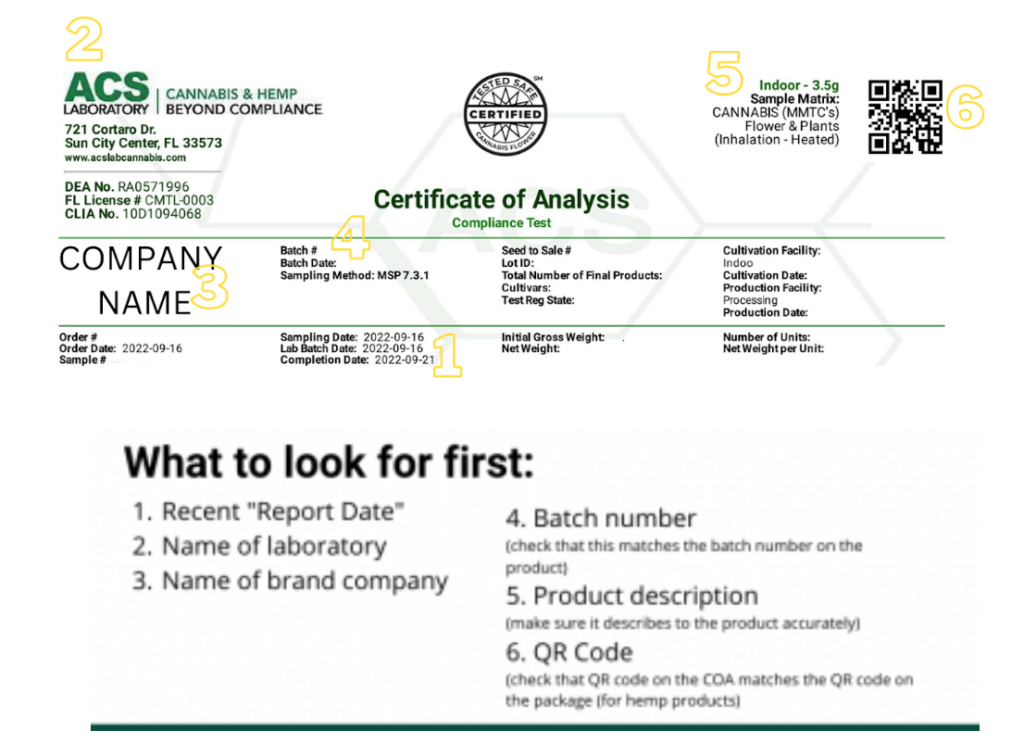
The Avantor CoA typically includes the following information:
- Product name and catalog number — exact identification of what you’re dealing with
- Lot or batch number — ties the document to a specific production run
- Manufacturing date and expiration date — helps you manage shelf life
- Chemical purity and assay results — expressed as percentages
- Physical properties — appearance, color, odor, solubility
- Test methods used — such as HPLC, titration, Karl Fischer, etc.
- Specifications vs. actual results — a side-by-side comparison
- Regulatory and compliance statements — including GMP, USP, EP, ACS, and other grade designations
- Authorized signature — from Avantor’s Quality Assurance team
“Quality is never an accident; it is always the result of intelligent effort.” — John Ruskin
This quote applies perfectly to what an Avantor CoA represents — it’s not just generated automatically. It’s the product of rigorous analytical testing, documented procedures, and a serious commitment to quality assurance.
Why the Avantor Certificate of Analysis Matters So Much
You might be wondering — why does this document get so much attention? Can’t you just trust that a product from a reputable supplier is good enough?
The short answer: no, you really can’t — at least not if you’re working in a regulated environment. And here’s why.
Suggested read: How BigCommerce Gift Certificates Work — And How to Use Them to Boost Your Store Revenue
Regulatory compliance is non-negotiable. Industries like pharmaceuticals, biotech, food testing, and environmental monitoring are governed by strict standards from bodies like the FDA, EMA, ISO, and USP. These organizations require documented evidence that every material used in your process meets defined quality criteria. Without an Avantor CoA, you simply have no documented proof.
Reproducibility depends on consistency. Good science demands that your results can be reproduced. If you’re using a solvent that’s 99.5% pure in one experiment and unknowingly switch to a 97% pure batch later, your results may diverge — not because your method changed, but because your material did. The Avantor certificate of analysis gives you full visibility into the exact purity and composition of each lot.
Liability and traceability. In pharmaceutical manufacturing especially, if something goes wrong downstream — say a drug batch fails a stability test — you need to trace back every input material. The CoA is your paper trail. Without it, you’re flying blind.
Import/export documentation. Many countries require CoA documentation for customs clearance of chemicals and lab reagents. Avantor’s CoA satisfies this requirement in most jurisdictions.
How to Find and Download an Avantor Certificate of Analysis
One of the best things about Avantor’s digital infrastructure is how easy they’ve made it to access CoA documents. You don’t need to email a sales rep or wait on hold — it’s all self-service.
Here’s exactly how to get your Avantor CoA online:
Step 1: Visit the Avantor CoA Portal
Go directly to the official Avantor CoA lookup page at avantorsciences.com/pages/en/certificate-of-analysis. This is the primary portal for accessing Avantor certificate of analysis documents.
Step 2: Enter Your Lot Number
You’ll need your lot number, which appears on the product label of the item you purchased. It’s usually a combination of letters and numbers, like “K47250891.” This is the most critical piece of information for retrieving the correct CoA.
Step 3: Enter the Catalog Number (Optional but Helpful)
Having the catalog number alongside the lot number narrows down the search significantly, especially for products that share similar naming conventions.
Step 4: Download or Print the CoA
Once the document pulls up, you can download it as a PDF for your records, attach it to batch records, or share it with your QA team.
Suggested read: How to Set Up a Gift Certificate on Squarespace (And Boost Your Sales)
Pro tip: Always archive CoA documents digitally and link them to your batch records or lab information management system (LIMS). Auditors love this kind of organized documentation trail.
Understanding the Data on an Avantor CoA — Line by Line
Let’s get into the actual content of an Avantor certificate of analysis and what each section really means. This is where a lot of people get confused, so we’ll break it down clearly.
Assay / Purity Values
This is arguably the most important section. The assay tells you the actual measured purity of the substance. For example:
| Parameter | Specification | Actual Result |
|---|---|---|
| Assay (by HPLC) | ≥ 99.0% | 99.6% |
| Water Content | ≤ 0.5% | 0.2% |
| Heavy Metals | ≤ 10 ppm | < 5 ppm |
| Residue on Ignition | ≤ 0.01% | < 0.01% |
Each row shows what Avantor’s specification requires (the minimum or maximum acceptable value) and what the actual test result was for your lot. If the result falls within the spec, the lot is released. If it doesn’t, it shouldn’t have reached you.
Grade Designations
Avantor products come in different grades, and the CoA will clearly state which grade your product is. Here are the most common ones:
- ACS Reagent Grade — meets American Chemical Society specifications, suitable for analytical work
- HPLC Grade — highly purified, low UV absorbance, ideal for liquid chromatography
- USP Grade — meets United States Pharmacopeia standards for pharmaceutical use
- EP Grade — meets European Pharmacopoeia standards
- GC Grade — optimized for gas chromatography analysis
- BioReagent Grade — tested for biological applications
- Certified Reference Material (CRM) — traceable to international standards like NIST
Knowing the grade is essential because using a lower-grade material in an application that requires a higher grade is a compliance issue — and can seriously compromise your results.
Test Methods Referenced
Avantor’s CoA will often reference the specific test method used for each parameter. For example:
- HPLC (High-Performance Liquid Chromatography) for purity
- Karl Fischer Titration for water content
- ICP-MS (Inductively Coupled Plasma Mass Spectrometry) for trace metals
- GC-FID for volatile impurities
- UV-Vis Spectrophotometry for UV absorbance cutoffs
Understanding the method tells you a lot about the sensitivity and reliability of the measurement. For instance, ICP-MS for heavy metals is significantly more sensitive than colorimetric tests, meaning results are more accurate and trustworthy.
Avantor’s Quality Systems Behind the CoA
It’s one thing to issue a document — it’s another to have a robust quality system backing it up. Avantor has invested heavily in quality infrastructure over the decades, and their CoA is just one output of a much larger system.
Avantor operates under cGMP (current Good Manufacturing Practices) at many of their manufacturing sites. This means their processes, equipment, personnel training, and documentation systems are all subject to regulatory scrutiny and periodic audits by bodies like the FDA and national health agencies.
Suggested read: Keyfactor Certificate Management: How It Works and Why Enterprises Need It Now
Their quality management system is also aligned with ISO 9001, the internationally recognized standard for quality management systems. This ensures that Avantor’s processes for designing, producing, testing, and distributing products are consistently well-managed and documented.
For pharmaceutical customers, Avantor can also provide Drug Master Files (DMFs) for certain excipients and active pharmaceutical ingredients — a level of documentation that goes even further than a standard CoA.
Avantor also maintains a Supplier Quality Management program, meaning the raw materials that go into their products are themselves screened and controlled. The CoA you receive is therefore not just about Avantor’s own testing — it reflects a chain of quality that starts from the raw material suppliers all the way to your bench.
Speaking of quality management systems, if you’re building out a full quality infrastructure for your organization, you might also want to explore ISO 27001 certification in Manila — particularly for organizations managing sensitive laboratory data and digital documentation systems.
Avantor Certificate of Analysis vs. Competitors: How Does It Stack Up?
Fair question. Avantor isn’t the only major lab supplier out there. How does their CoA compare to other big names like Sigma-Aldrich (MilliporeSigma), Thermo Fisher Scientific, and VWR?
| Feature | Avantor | Sigma-Aldrich | Thermo Fisher | VWR |
|---|---|---|---|---|
| Online CoA lookup | ✅ Yes | ✅ Yes | ✅ Yes | ✅ Yes |
| Lot-specific CoA | ✅ Yes | ✅ Yes | ✅ Yes | ✅ Yes |
| Multiple grade options | ✅ Yes | ✅ Yes | ✅ Yes | Limited |
| CRM/Reference Materials | ✅ Yes | ✅ Yes | ✅ Yes | Limited |
| cGMP documentation support | ✅ Yes | ✅ Yes | ✅ Yes | Partial |
| DMF availability | ✅ Yes | ✅ Yes | ✅ Yes | Partial |
| Language options | Multilingual | Multilingual | Multilingual | Limited |
What Avantor tends to excel at — particularly through its J.T.Baker and Macron Fine Chemicals brands — is high-purity solvents and reagents for pharmaceutical and semiconductor applications. Their CoAs for these product lines are particularly detailed and often include more test parameters than standard industry requirements.
Real-World Use Cases: When the Avantor CoA Makes a Critical Difference
Let’s look at a few realistic scenarios where the Avantor certificate of analysis plays a starring role.
Case Study 1: Pharmaceutical Batch Release
A mid-sized pharmaceutical manufacturer uses Avantor’s USP-grade excipients in their tablet manufacturing process. Before any batch can be released to market, their QA team needs to verify that every incoming raw material meets specification. The Avantor CoA is reviewed, cross-referenced against internal specifications, and filed as part of the batch record. Without this document, the batch cannot legally be released.
During an FDA inspection, the inspector asks to see documentation for materials used in a specific product batch from two years ago. Because the company archived all incoming CoAs digitally linked to batch records, they pull it up in seconds. Inspection passed. ✅
Case Study 2: Research Reproducibility Issue
A university chemistry lab is investigating why their reaction yields have been inconsistent across three months. After reviewing their lab notebook, they realize they ordered three different lots of a key reagent — but never checked the CoAs. When they finally pull the Avantor CoA for each lot, they discover that the water content varied significantly between batches (from 0.1% to 0.8%). This explained the yield variation. Now they spec incoming reagents more tightly and always review the CoA before use.
Suggested read: Access Certification Process: What It Is, How It Works, and Why It Matters for Your Organization
Case Study 3: Regulatory Audit at a CRO
A contract research organization (CRO) undergoes a GLP (Good Laboratory Practice) audit. The auditor specifically requests CoAs for all reference standards used in a study. The CRO provides Avantor CoAs with full traceability. The auditor notes the documents are comprehensive, lot-specific, and properly archived. Zero findings related to materials documentation. ✅
Common Mistakes People Make with Avantor CoA Documents
Even experienced lab professionals slip up sometimes. Here are the most common mistakes — and how to avoid them.
1. Not checking the lot number match The most critical error: using a CoA from a different lot than the one you actually received. Always verify that the lot number on the CoA matches the lot number on your product label exactly.
2. Ignoring expiration dates A CoA shows the specification at time of testing and manufacture. If your product is past its expiration date, the CoA from the manufacture date doesn’t guarantee the product still meets spec. Retest if needed or discard expired material.
3. Assuming the CoA covers every possible impurity Avantor’s CoA tests for a defined set of parameters. It doesn’t test for every conceivable contaminant. If your application requires testing for a specific impurity not listed, you may need additional verification or a custom specification.
4. Not keeping CoAs with batch records Filing your CoA separately from your production or study records defeats the purpose of traceability. Always link CoAs to the specific experiment or batch they relate to.
5. Using the wrong grade product Ordering a general lab grade reagent when your method requires HPLC grade — and then wondering why your chromatography is noisy. Always match the product grade to your application requirement, and use the CoA to confirm the grade.
How Avantor Is Digitizing the Certificate of Analysis Experience
Avantor has been evolving its digital capabilities significantly. Their e-commerce platform and customer portals now allow customers to:
- Access CoAs 24/7 without contacting customer service
- Search by catalog number, lot number, or product name
- View historical CoAs for previous orders
- Download in PDF format for archiving
- Integrate CoA data into LIMS systems via API (for enterprise customers)
This is a big deal for large organizations that handle hundreds or thousands of raw material lots per year. Manual CoA collection used to be a time-consuming administrative burden. Now it’s largely automated.
Additionally, Avantor has been working toward digital supply chain transparency, where CoA data is linked to broader supply chain documentation — including supplier CoAs, shipping conditions, and handling records. This kind of end-to-end traceability is increasingly demanded by pharmaceutical regulators globally.
Suggested read: MBA Certificate vs MBA Degree: Which One Is Actually Worth Your Time and Money?
Avantor Certificate of Analysis and Regulatory Standards
The Avantor CoA isn’t created in a vacuum — it’s designed to align with a web of international and national regulatory standards. Here’s a breakdown:
| Standard | Relevance to Avantor CoA |
|---|---|
| USP (United States Pharmacopeia) | CoA confirms compliance with USP monograph specifications for pharmaceutical-grade materials |
| EP (European Pharmacopoeia) | CoA confirms compliance with EP specifications for European markets |
| ICH Q7 | Good Manufacturing Practice guide for active pharmaceutical ingredients — CoA is a required document |
| ISO 9001 | Avantor’s QMS framework ensures CoA issuance processes are controlled and documented |
| 21 CFR Part 211 | FDA regulation for finished pharmaceuticals — requires documented CoAs for all components |
| GLP (OECD) | CoA documentation required for all reference substances in GLP studies |
| REACH (EU) | Chemical safety information often accompanies CoA documentation |
Understanding which standards apply to your industry and how Avantor’s CoA addresses them is essential for compliance planning.
Tips for Managing Avantor CoAs in Your Organization
If you’re responsible for managing quality documentation in a lab or manufacturing environment, here are some practical tips for handling Avantor certificate of analysis documents efficiently.
- Create a centralized CoA repository — use a shared drive, LIMS, or document management system where all CoAs are stored in a standardized folder structure (e.g., by product category, supplier, year)
- Name files consistently — use a naming convention like
[SupplierName]_[CatalogNo]_[LotNo]_CoA_[Date].pdfso documents are easy to search and retrieve - Set reminders for expiration dates — some LIMS systems allow you to flag materials approaching their expiry; if yours doesn’t, a simple spreadsheet tracker works fine
- Conduct incoming QC reviews — don’t just file CoAs — actually review them. Compare Avantor’s results against your own internal specifications. If something doesn’t match, flag it before using the material
- Train your team — make sure everyone who handles incoming materials understands how to pull, verify, and file a CoA. It’s not just a QA department responsibility
- Audit your CoA records regularly — during internal audits, spot-check that CoAs are on file for all materials in use. Missing CoAs are a common audit finding and easily preventable
FAQs About the Avantor Certificate of Analysis
What is the Avantor certificate of analysis used for? The Avantor certificate of analysis is used to verify that a specific lot of a product meets defined quality specifications. It’s essential for regulatory compliance, quality assurance, research reproducibility, and traceability in laboratory and manufacturing environments.
Where can I find the Avantor certificate of analysis for my product? You can access the Avantor certificate of analysis directly on their official website at avantorsciences.com/pages/en/certificate-of-analysis. You’ll need your product’s lot number, which is printed on the product label.
Is the Avantor certificate of analysis lot-specific? Yes. Every Avantor certificate of analysis is specific to a particular production lot. This means that even for the same product, different lots will have different CoAs reflecting the actual test results for that specific batch.
How long should I keep an Avantor certificate of analysis on file? This depends on your industry. In pharmaceutical manufacturing under GMP regulations, batch records and associated CoAs must typically be kept for at least 1 year after the product’s expiration date, or for a minimum of 3 years after distribution — whichever is longer. For research labs under GLP, retention is usually the duration of the study plus an additional period specified by the regulatory body.
Can the Avantor certificate of analysis be used for customs documentation? Yes, in many cases the Avantor certificate of analysis is accepted as documentation for customs clearance of chemical shipments. It confirms the identity, purity, and specifications of the material being imported or exported.
Does Avantor provide CoAs for all their products? Avantor provides certificates of analysis for the vast majority of their products. However, for certain commodity or standard laboratory items, the level of detail may vary. For high-purity, pharmaceutical-grade, or reference standard products, CoAs are always detailed and comprehensive.
What should I do if the Avantor certificate of analysis doesn’t match my internal specifications? If you find a discrepancy between the Avantor CoA results and your internal specifications, do not use the material until the issue is resolved. Contact Avantor’s customer service or technical support team, and also quarantine the product in your inventory system. Document the discrepancy and initiate a supplier deviation or nonconformance report per your organization’s procedures.
Is the Avantor certificate of analysis the same as a Safety Data Sheet (SDS)? No, these are two completely different documents. The Avantor CoA documents quality and purity test results for a specific lot. The Safety Data Sheet (SDS) — formerly known as MSDS — provides information about the hazards, handling, storage, and emergency procedures related to a chemical substance. Both documents are important, but they serve very different purposes.
Get Your Avantor Certificate of Analysis Now
Ready to pull documentation for your lab materials? Don’t wait — access your Avantor certificate of analysis directly from Avantor’s official portal today. All you need is your product’s lot number, and you’ll have a downloadable PDF within seconds.
Whether you’re preparing for a regulatory audit, reviewing incoming materials, or setting up your quality documentation system, starting with an accurate and complete Avantor CoA is the right move. Make it a non-negotiable part of your lab workflow.
Citation: Avantor Sciences. “Certificate of Analysis.” Avantor Official Website. https://www.avantorsciences.com/pages/en/certificate-of-analysis. Accessed May 2026.