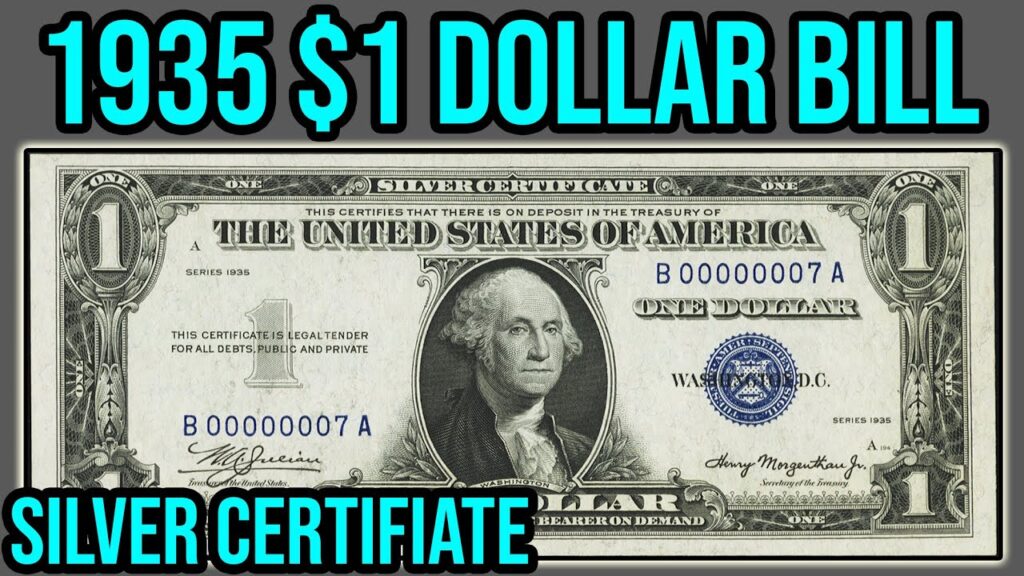
The worth of United States currency printed in 1935 and redeemable in silver is a topic of interest to collectors and those curious about numismatics. Several factors influence this financial instrument’s price, including its condition, the specific series designation (denoted by letters following the date), and the signature combination of the Treasurer and Secretary of the Treasury.
These notes represent a specific era in U.S. monetary history when currency was directly linked to precious metals. Their value derives not only from their historical significance but also from their scarcity and aesthetic appeal. Higher grades (uncirculated condition) command significantly higher prices than those showing wear and tear. Furthermore, certain series, particularly those with errors or star notes (indicated by a star symbol), are considered rarer and thus more valuable.
The subsequent sections will explore the grading system used to assess condition, the identifying features that differentiate various series, and resources available for determining a precise assessment of these historical instruments. This will provide a comprehensive overview for individuals seeking to understand the factors impacting the potential worth of such items.
1. Condition
The physical state of a Series 1935 A silver certificate is a primary determinant of its market price. Condition directly influences collectibility, as pristine, uncirculated notes are inherently more desirable and scarce than those showing signs of wear. The degree of preservation impacts the aesthetic appeal and the legibility of key features, such as the serial numbers, signatures, and intricate design elements. Damage, fading, or staining detracts from the note’s value, potentially rendering it less appealing to collectors.
Grading services, such as PCGS and PMG, assign numerical grades based on a standardized scale to objectively assess a note’s condition. A note graded as “Gem Uncirculated” (typically 65 or higher) exhibits exceptional paper quality, sharp corners, and vibrant colors, commanding a premium compared to a circulated note graded as “Fine” or “Very Good.” For example, a Series 1935 A silver certificate in Gem Uncirculated condition might be worth several times more than the same series in Very Good condition, demonstrating the significant impact of condition on value.
In summary, condition is not merely a superficial attribute but a core component of the assessed worth. The better the state of preservation, the higher the potential financial return, thereby highlighting the importance of proper storage and handling. The grade assigned by reputable grading services provides a standardized and reliable measure, enabling collectors and investors to accurately evaluate the potential worth of these historical notes.
Suggested read: Iowa Teaching Certificate Renewal: Everything Educators Need to Know in 2025
2. Series Designation
The series designation, indicated by a letter following the year 1935 on a silver certificate, represents a critical factor influencing its value. This designation denotes a specific printing run and signature combination, directly impacting scarcity and, consequently, the potential market price.
-
Impact of Signature Combinations
Each series designation is associated with a specific pairing of the U.S. Treasurer and Secretary of the Treasury. Different combinations of signatures can vary in rarity. Series with shorter tenures or less frequent printing runs often command higher prices due to their limited availability. For instance, a 1935 A series certificate with a less common signature combination is generally more valuable than a more prevalent one.
-
Rarity and Print Runs
The quantity of notes printed within a particular series significantly affects value. Series designations that had smaller print runs are typically scarcer and more sought after by collectors. Records of print runs are publicly available, allowing for a comparative analysis of scarcity between different series. A lower print run inherently translates to a higher potential value, assuming other factors like condition are equal.
-
Distinguishing Features and Varieties
Within a single series designation, subtle variations may exist in printing characteristics or design elements. These minor differences, often undetectable to the untrained eye, can impact collectibility. Examples include variations in the color of ink or minor alterations in the placement of design features. These nuances, while subtle, contribute to the overall value and desirability of specific certificates.
Suggested read: Keyfactor Certificate Management: How It Works and Why Enterprises Need It Now
-
The “A” Designation Significance
The initial “A” designation following the year 1935 indicates the first series of silver certificates issued under that year. This is a foundational factor in understanding the larger landscape of these notes. The subsequent letters (B, C, D, etc.) represent later series with different signature combinations. The letter itself thus serves as an initial marker of the specific printing run and signature combination associated with a given note.
In conclusion, the series designation serves as a vital identifier, dictating the specific printing run, signature pairing, and potential for unique variations within the broader category of 1935 series silver certificates. This designation is crucial in accurately assessing its worth.
3. Signatures
The signatures present on a Series 1935 A silver certificate are integral to determining its value. These signatures, those of the U.S. Treasurer and the Secretary of the Treasury at the time of printing, serve as identifiers of specific production periods and administrative control. Changes in these positions resulted in different signature combinations, leading to varying degrees of scarcity among the notes. A less common signature pairing, reflecting a shorter tenure or a smaller printing volume during a particular administration, inherently increases a certificate’s potential worth. For example, a Series 1935 A certificate with the signatures of W.A. Julian and Henry Morgenthau Jr. is more commonplace than one featuring a combination that was in circulation for a briefer period. Consequently, the signature combination directly impacts collectibility and valuation.
Furthermore, the clarity and legibility of these signatures contribute to the overall condition assessment of the note. Faded, smudged, or otherwise obscured signatures detract from the certificate’s aesthetic appeal and can lower its grade. High-grade examples with sharp, well-defined signatures are more desirable to collectors. Signature analysis, therefore, is a fundamental step in the authentication process. Expert examination can sometimes reveal inconsistencies or anomalies that indicate counterfeiting or alterations. The signatures provide verifiable proof of authenticity and production time.
In summary, the signatures on a Series 1935 A silver certificate are more than just official endorsements; they are critical indicators of scarcity, authenticity, and overall condition. Their presence and state of preservation are crucial considerations for accurately assessing the note’s potential worth within the numismatic market. Recognizing the significance of these signatures is essential for collectors and investors alike.
4. Star Notes
Star notes within the Series 1935 A silver certificates denote replacement currency. When a note was damaged or flawed during the printing process, it was removed and replaced with a note bearing a star symbol (*) in place of the serial number suffix letter. This process maintained the sequential integrity of the numbering system. Star notes are inherently rarer than their non-star counterparts, as they represent a smaller fraction of the total printed currency. The scarcity of these replacement notes directly influences their value. For example, a Series 1935 A silver certificate in uncirculated condition typically commands a certain price; however, a comparable star note from the same series, due to its relative rarity, will likely garner a higher premium in the numismatic market. The presence of a star, therefore, serves as a clear indicator of potential increased value.
Suggested read: Iowa Teaching Certificate Renewal: Everything Educators Need to Know in 2025
The extent of the premium for star notes depends on several factors, including the specific series, the signature combination, and the overall condition of the note. Certain series of Series 1935 A silver certificates had a significantly lower production of star notes, further amplifying their desirability among collectors. Public records of printing figures provide valuable insights into the relative scarcity of specific star note varieties. The greater the scarcity, the higher the potential value. The demand for star notes is also driven by the challenge of completing a collection, as acquiring these less common replacements adds a layer of complexity and accomplishment.
In summary, the star symbol on a Series 1935 A silver certificate signifies a replacement note, inherently scarcer than standard notes. This scarcity translates to a potential increase in value within the numismatic market, the degree of which depends on the specific series, signature combination, condition, and the overall demand from collectors. Recognition of the star symbol and an understanding of its implications are essential for accurately assessing the worth of such certificates.
5. Errors
Printing anomalies discovered on Series 1935 A silver certificates can significantly influence their numismatic worth. These errors, resulting from imperfections during the manufacturing process, are often scarce and therefore highly coveted by collectors. The presence of such errors deviates from the intended design, transforming the affected notes into unique specimens. This peculiarity directly impacts their assessed market price.
-
Inverted Overprints
One notable error is the presence of inverted overprints, where elements such as the serial numbers or treasury seals are printed upside down in relation to the rest of the design. This misalignment is a clear and easily identifiable deviation from the standard production, making it a sought-after variety. For instance, a Series 1935 A certificate exhibiting an inverted serial number will invariably command a higher value compared to a standard, error-free example, provided its condition is comparable.
-
Misaligned Prints
Misaligned prints occur when the various layers of ink or design elements are not correctly registered during the printing process. This can result in shifted portraits, off-center borders, or incomplete design features. The severity of the misalignment influences the note’s value, with more dramatic misalignments typically attracting greater interest. The extent of the shift directly correlates with the collector’s willingness to pay a premium.
Suggested read: Sterigenics ISO Certificate: Everything You Need to Know About Their Quality Certifications
-
Blank or Missing Prints
In rare instances, certain design elements may be entirely missing from a Series 1935 A certificate due to a printing malfunction. This could involve the absence of the serial numbers, treasury seal, or even portions of the portrait. Such dramatic errors are exceedingly rare and can significantly elevate the note’s value. For example, a note with a completely missing serial number would be considered a highly desirable specimen.
-
Cutting Errors
Though technically a production error rather than a printing error, miscut notes are also of interest. These notes were improperly cut during the separation process, resulting in portions of adjacent notes being visible or the design being significantly off-center. A dramatically miscut Series 1935 A certificate with a clear portion of the neighboring note visible is more appealing to specialized error collectors, potentially increasing its market price.
In summary, printing imperfections or production errors on Series 1935 A silver certificates transform them into unique artifacts, highly desirable to numismatists. The magnitude and visibility of the error, combined with the note’s overall condition and the demand from collectors specializing in error notes, collectively determine the premium placed upon these flawed, yet fascinating, pieces of currency.
6. Rarity
The scarcity of a Series 1935 A silver certificate is a primary driver of its valuation in the numismatic market. Reduced availability amplifies collector interest, leading to heightened demand and, consequently, increased prices. Rarity is not a singular attribute but a confluence of factors that limit the quantity of a particular certificate, making it more difficult to acquire.
-
Print Run Size
Suggested read: MBA Certificate vs MBA Degree: Which One Is Actually Worth Your Time and Money?
The number of certificates initially printed within a specific series directly impacts its current rarity. Series with smaller print runs inherently have fewer surviving examples. Government records provide details on these original quantities, enabling a quantitative assessment of relative scarcity. Lower initial print volumes result in a higher premium for extant notes, assuming all other factors are equal.
-
Survival Rate
The percentage of originally printed certificates that have survived to the present day is another critical component of rarity. Factors such as wear and tear, accidental destruction, and intentional removal from circulation influence this survival rate. A series with a larger initial print run may still be considered rare if a significantly lower proportion of those notes remain in existence. Estimating survival rates requires considering historical circulation patterns and the likelihood of long-term preservation.
-
Specific Signature Combinations
Certain signature combinations of the Treasurer and Secretary of the Treasury are less common due to shorter terms in office or specific printing schedules. These variations create sub-categories of rarity within a given series. A certificate with a less frequently encountered signature combination is generally more valuable than one with a more prevalent pairing, provided condition and other attributes are similar. Documenting and identifying these signature varieties is essential for accurate valuation.
-
Presence of Errors and Varieties
Certificates exhibiting printing errors or unique design varieties are, by definition, less common than standard notes. These anomalies, ranging from misprints to inverted overprints, generate increased collector interest due to their distinctiveness. The rarity of a specific error or variety directly correlates with its impact on valuation. More dramatic or less frequently encountered errors command higher premiums, appealing to specialized error collectors.
Suggested read: Best Certificate of Insurance Tracking Software: Top Tools to Protect Your Business in 2025
In conclusion, the rarity of a Series 1935 A silver certificate is a multifaceted characteristic encompassing initial print quantities, survival rates, signature variations, and the presence of unique errors or varieties. This confluence of factors directly influences the potential valuation, making rarity a central consideration for collectors and investors in the numismatic market. The degree of scarcity often determines the level of collector enthusiasm and the ultimate market price.
Frequently Asked Questions
This section addresses common inquiries concerning the factors influencing the assessed worth of Series 1935 A silver certificates. The information presented is intended to provide clarity regarding the complexities of numismatic valuation.
Question 1: How does the condition of a Series 1935 A silver certificate impact its value?
Condition is a primary determinant of a certificate’s worth. Higher grades, indicating minimal wear and tear, command substantially higher prices than circulated examples. Grading services such as PCGS and PMG provide standardized assessments of condition.
Question 2: What role does the series designation (e.g., “A”) play in determining value?
The series designation, denoted by a letter following the date, indicates a specific printing run and signature combination. Certain series designations are scarcer than others, leading to variations in value. Lower print runs generally correlate with higher potential worth.
Question 3: How do the signatures of the Treasurer and Secretary of the Treasury affect valuation?
Suggested read: Gift Certificate Tracking Software: Everything You Need to Know Before You Buy
Different combinations of signatures exist due to changes in these positions. Less common signature pairings are often more valuable due to their relative scarcity. The clarity and legibility of the signatures also contribute to the overall condition assessment.
Question 4: What is the significance of a star symbol (*) on a Series 1935 A silver certificate?
A star symbol indicates that the note is a replacement for one damaged during printing. Star notes are generally rarer than non-star notes and command a premium in the numismatic market.
Question 5: Do printing errors increase the value of these certificates?
Yes, printing errors, such as inverted overprints or misaligned prints, can significantly increase value. The extent and visibility of the error, combined with overall condition, influence the premium.
Question 6: What factors contribute to the overall rarity of a Series 1935 A silver certificate?
Rarity is a combination of factors, including the initial print run size, survival rates, specific signature combinations, and the presence of errors or varieties. All these influence rarity which is directly proportional to increase potential valuation in the numismatic market.
Suggested read: How Avantor Certificate of Analysis Keeps Your Lab Work Reliable and Trustworthy
In summary, accurately assessing the worth of a Series 1935 A silver certificate requires careful consideration of condition, series designation, signatures, the presence of a star symbol, printing errors, and overall rarity. These factors collectively determine the potential market value.
The subsequent section will explore resources for determining a more precise assessment of value, including reputable grading services and price guides.
Valuation Tips for Series 1935 A Silver Certificates
The following recommendations facilitate the accurate assessment of these historical financial instruments.
Tip 1: Examine the Certificate’s Condition Meticulously: Assess the degree of wear, creasing, staining, and fading. Uncirculated notes command significantly higher prices. Consult grading service standards for objective evaluation.
Tip 2: Identify the Specific Series Designation: Note the letter following “1935” (e.g., “A,” “B,” “C”). This designation identifies a particular printing run and signature combination. Consult a series-specific reference guide for details.
Tip 3: Verify the Signature Combination: Identify the Treasurer and Secretary of the Treasury signatures. Less common pairings contribute to higher value. Consult a signature reference guide for confirmation.
Tip 4: Scrutinize the Note for a Star Symbol: Determine if a star symbol appears in place of the serial number suffix letter. Star notes, indicating replacement currency, are scarcer.
Suggested read: Certificate of Insurance for Workers Compensation: What Every Business Owner Must Know
Tip 5: Inspect for Potential Printing Errors: Examine the certificate for misprints, inverted overprints, or missing elements. Even small errors can significantly affect value.
Tip 6: Consult Reputable Price Guides: Utilize established price guides from recognized numismatic authorities. A cross-reference multiple guides for a broader perspective, but be mindful that these guides are an estimate, not a guarantee.
Tip 7: Seek Expert Authentication: Consider professional authentication from a reputable grading service (PCGS, PMG). Professional authentication can verify authenticity, grade the note, and provide a certification.
Applying these guidelines facilitates a more accurate assessment, mitigating the risk of over- or under-valuation. Consistent application of these practices enables a more informed understanding of these certificates’ potential worth.
This concludes the examination of factors influencing the worth of Series 1935 A silver certificates.
Series 1935 A Silver Certificate Value
The preceding analysis elucidates the multifaceted elements that collectively determine the “series 1935 a silver certificate value.” Factors such as physical condition, series designation, signature combinations, the presence of a star symbol, printing errors, and overall rarity are paramount considerations in assessing its potential worth. Each aspect contributes to a complex interplay that influences the final valuation.
A comprehensive understanding of these key determinants empowers individuals to make informed decisions regarding acquisition, disposition, or appreciation of these historical instruments. Continued engagement with the numismatic community and diligent adherence to established valuation practices remain essential for accurate and responsible assessment. The information provided serves as a foundation for further exploration and a stimulus for conscientious engagement with these remnants of monetary history.