Getting certified as a personal trainer is one of the most pivotal decisions you’ll make in your fitness career. And if you’ve been researching certifications, you’ve almost certainly stumbled upon NASM — the National Academy of Sports Medicine. But with a price tag that can reach over $1,000 and a pass rate that demands serious study, you’re right to ask: is NASM certification worth it?
The short answer? For the right person, yes — absolutely. But let’s go deeper than that. This article breaks down every angle — cost, career outcomes, exam difficulty, employer perception, and real-world ROI — so you can make an informed decision with confidence.
What Is NASM and Why Does It Matter?
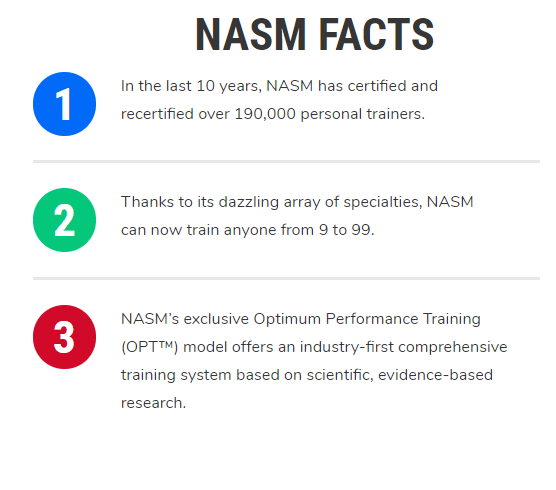
The National Academy of Sports Medicine (NASM) was founded in 1987 and has since become one of the most recognized personal training certifications in the fitness industry. NASM is accredited by the National Commission for Certifying Agencies (NCCA), which is widely considered the gold standard of accreditation in health and fitness certifications.
NASM’s flagship credential is the Certified Personal Trainer (CPT) designation. It is built around the Optimum Performance Training™ (OPT™) model — a science-backed, systematic approach to program design that progresses clients through stabilization, strength, and power phases.
“NASM has trained over 1.4 million fitness professionals in 100+ countries, making it one of the largest and most globally recognized certification bodies in the industry.” — NASM Official Site
What sets NASM apart from many competitors is its clinical foundation. The curriculum draws heavily from corrective exercise, biomechanics, and sports science — making it especially relevant for trainers who want to work with injury-prone populations, athletes, or physical therapy adjacent roles.
Suggested read: Chief Revenue Officer Certification: Top Programs, Career Benefits & How to Choose the Right One
Is NASM Certification Worth It? Breaking Down the Core Value
The Industry Recognition Factor
When hiring managers at major gym chains like LA Fitness, Equinox, Life Time Fitness, and Gold’s Gym review resumes, NASM CPT consistently appears on their preferred or required certifications list. This isn’t a coincidence.
| Certification | NCCA Accredited | Industry Recognition | Avg. Pass Rate |
|---|---|---|---|
| NASM CPT | ✅ Yes | ⭐⭐⭐⭐⭐ Very High | ~62–65% |
| ACE CPT | ✅ Yes | ⭐⭐⭐⭐ High | ~65–70% |
| ISSA CPT | ❌ No (DEAC) | ⭐⭐⭐ Moderate | ~80–85% |
| NSCA CPT | ✅ Yes | ⭐⭐⭐⭐ High (strength focus) | ~55–60% |
| ACSM CPT | ✅ Yes | ⭐⭐⭐⭐ High (clinical focus) | ~60% |
As the table shows, NASM sits at the top of the recognition hierarchy alongside NSCA and ACE — and its pass rate reflects a genuinely rigorous curriculum, not just a rubber-stamp exam.
NASM CPT Salary Expectations
One of the biggest drivers of whether a certification is “worth it” is the salary or income it unlocks. Here’s what the data says:
- Average NASM-CPT certified trainer salary: $45,000–$65,000/year (employed, full-time)
- Freelance/self-employed NASM trainers: $60–$150+ per hour
- Trainers with NASM + specialty certs: Up to $80,000–$100,000/year
According to the U.S. Bureau of Labor Statistics, fitness trainer employment is projected to grow 14% from 2022 to 2032 — much faster than the national average. Holding a top-tier credential like NASM puts you ahead of the curve as demand rises.
“Certified personal trainers with reputable credentials consistently command higher session rates and are more likely to be hired at premium fitness facilities.” — IDEA Health & Fitness Association
How Much Does NASM Certification Cost?
NASM CPT Pricing Tiers (2025–2026)
Let’s be transparent about the numbers. NASM offers several package options:
Suggested read: ACE Group Fitness Certification Reviews: Is It Actually Worth Your Time and Money in 2025?
| Package | Price Range | What’s Included |
|---|---|---|
| Self-Study | ~$699 | Textbook, study guide, exam |
| Premium Self-Study | ~$899 | Above + practice exams, flashcards |
| All-Inclusive | ~$1,099 | Above + live webinars, fitness business kit |
| Guided Study (with coach) | ~$1,499+ | Above + 1:1 study coaching |
💡 Pro Tip: NASM frequently runs sales — up to 40% off during Black Friday, New Year, and fitness industry events. You can realistically snag the Premium package for ~$500–$600 if you time it right.
Additional Costs to Budget For
- CPR/AED Certification (required): $30–$80
- Liability Insurance (recommended): $150–$300/year
- Continuing Education Credits (CECs): Required every 2 years — approximately $100–$300
Total First-Year Investment: ~$900–$1,500 depending on packages and timing.
Compare that to the earning potential of even a part-time training career — 5 clients per week at $70/session = $1,400/month. The certification pays for itself within the first month of consistent work.
Is the NASM Exam Hard? What the Pass Rate Tells Us
Understanding the NASM CPT Exam Format
The NASM CPT exam is not easy, and that’s actually one of the reasons it’s respected. Here are the key stats:
- Number of questions: 120 (100 scored + 20 unscored pilot questions)
- Time limit: 2 hours
- Passing score: 70% (700 out of 1,000 scaled score)
- Format: Multiple choice, computer-based
- Delivery: Pearson VUE testing centers or online proctored
The exam covers six content domains:
- Basic and Applied Sciences (~20%)
- Assessment (~16%)
- Program Design (~22%)
- Exercise Technique and Training Instruction (~24%)
- Client Relations and Coaching (~10%)
- Business and Legal (~8%)
The heaviest-weighted sections — Program Design and Exercise Technique — require you to truly understand the OPT model, not just memorize it. This is where many candidates struggle.
Suggested read: ISO 27001 Training and Certification: What You Need to Know in 2025
Common Reasons Candidates Fail
- ❌ Trying to memorize without understanding the OPT model framework
- ❌ Underestimating the anatomy and biomechanics sections
- ❌ Not taking enough practice exams under timed conditions
- ❌ Skipping the corrective exercise and flexibility chapters
- ❌ Rushing through the study period (NASM recommends 8–12 weeks of study)
Who Is NASM Certification Best For?
Ideal Candidates for NASM CPT
NASM is worth it most for:
- Beginners entering personal training who want the most recognized entry-level credential
- Trainers who want to work at major gym chains that list NASM as preferred/required
- Those interested in corrective exercise — NASM’s OPT model has a strong corrective foundation
- Trainers targeting the general population (weight loss, toning, general fitness goals)
- Entrepreneurs planning to build an independent training business and want credibility
When NASM Might NOT Be the Best Fit
| Scenario | Better Alternative |
|---|---|
| You want to train elite athletes | NSCA CSCS (Strength & Conditioning) |
| You’re focused on clinical/medical populations | ACSM EP-C |
| You’re on a very tight budget | ISSA CPT (lower cost, online-friendly) |
| You already have a kinesiology degree | NSCA CPT or ACSM CPT |
| You want to specialize in nutrition coaching | NASM CNC (Nutrition Coach) or Precision Nutrition |
NASM vs. ACE vs. ISSA: Which Certification Is Actually Worth It?
This is the question that fuels endless forum debates — and for good reason. Each cert has real strengths. Here’s a no-fluff breakdown:
NASM vs. ACE
Both are NCCA-accredited and widely respected. The key differences:
- NASM is more structured and science-heavy, centered on the OPT model
- ACE is slightly more flexible in programming philosophy and has a strong health coaching angle
- Employer preference: NASM edges out ACE at most major commercial gyms
- Difficulty: Roughly comparable; NASM is often considered slightly harder
Verdict: If you want the most universally recognized cert, go NASM. If you’re leaning toward wellness/health coaching hybrid roles, ACE is excellent.
NASM vs. ISSA
- ISSA is not NCCA-accredited (it’s DEAC-accredited — a distance education standard)
- ISSA offers a lifetime certification model and is more affordable
- NASM has stronger employer credibility, especially at premium fitness facilities
- ISSA is easier and more accessible — good for those who want to get certified quickly
Verdict: If employer credibility and career advancement at top facilities matter to you, NASM is the stronger investment.
Real-World Case Studies: NASM-Certified Trainers Share Their Experience
Case Study 1: From Corporate Job to Six-Figure Trainer
Marcus T., Los Angeles, CA
Marcus left a marketing career at 31 to pursue personal training. He chose NASM specifically because three gyms he applied to listed it as “preferred.” He studied for 10 weeks, passed on his first attempt, and was hired at Equinox within 60 days of certification.
Suggested read: Access Certification Process: What It Is, How It Works, and Why It Matters for Your Organization
“NASM opened doors I genuinely don’t think other certs would have. Within my first year, I had a full client roster and was earning more than my corporate salary.”
Within 18 months, Marcus added the NASM Corrective Exercise Specialization (CES) and began working with physical therapy referral networks — nearly doubling his per-session rate.
Case Study 2: Online Trainer Who Leveraged NASM for Brand Authority
Priya S., Austin, TX
Priya built an online training business targeting postpartum women. She credits her NASM CPT (plus the NASM Women’s Fitness Specialization) as foundational to her brand credibility.
“My clients — especially the ones referred by OB-GYNs — specifically asked if I was NASM certified. It gave them confidence. It’s not just a piece of paper; it signals a standard.”
Her business now generates over $8,000/month via online programs, 1:1 remote training, and group coaching.
Suggested read: AIB Certification: What It Is and Why It Matters for Food Safety
NASM Specialty Certifications: Expanding Your Worth
One of the biggest underrated values of starting with NASM CPT is the ecosystem of specialty certifications it unlocks. These dramatically increase your earning potential and market positioning.
Top NASM Specialty Certs and Their Value
| Specialty Cert | Abbreviation | Ideal For | Avg. Cost |
|---|---|---|---|
| Corrective Exercise Specialist | CES | Injury prevention, PT adjacent | ~$599–$899 |
| Performance Enhancement Specialist | PES | Athletes, sports performance | ~$599–$899 |
| Certified Nutrition Coach | CNC | Holistic/wellness-focused trainers | ~$699–$999 |
| Women’s Fitness Specialist | WFS | Postpartum, prenatal, women-focused | ~$299–$499 |
| Senior Fitness Specialist | SFS | Older adult populations | ~$299–$499 |
| Behavior Change Specialist | BCS | Psychology-informed coaching | ~$299–$499 |
Trainers who stack NASM CPT + CES or PES consistently report being able to charge $15–$30 more per session than trainers with a single credential.
How NASM Compares to a Kinesiology Degree
A question worth addressing directly: is NASM worth it if you already have (or are considering) a kinesiology or exercise science degree?
| Factor | NASM CPT | 4-Year Kinesiology Degree |
|---|---|---|
| Time to Complete | 3–6 months | 4 years |
| Cost | ~$700–$1,500 | $40,000–$120,000+ |
| Employer Recognition (Gym) | ⭐⭐⭐⭐⭐ | ⭐⭐⭐ (degree alone isn’t enough) |
| Clinical/Medical Career Paths | ❌ Limited | ✅ Extensive |
| Immediate Earning Potential | ✅ High | ❌ Requires cert + degree |
The key insight here: most gym employers require a CPT certification regardless of your degree. Even exercise science graduates typically need to hold a recognized cert like NASM to work as personal trainers. So if your goal is to train clients — not enter physical therapy or clinical roles — NASM is almost always the faster, more cost-effective path.
If you’re also interested in strength and conditioning for sports teams, you might want to explore the SPAB certification alongside NASM, as SPAB focuses on performance coaching within athletic settings.
The Renewal Process: Is It a Hidden Cost?
NASM certification must be renewed every 2 years. Here’s what that involves:
Suggested read: MBA Certificate vs MBA Degree: Which One Is Actually Worth Your Time and Money?
- 2.0 CECs (Continuing Education Credits) required per cycle
- CPR/AED must remain current
- Renewal fee: ~$99
- CECs can be earned via: NASM courses, approved workshops, conferences, or third-party providers
Many trainers actually view the renewal requirement positively — it ensures the industry stays current with evolving exercise science. NASM’s own continuing education catalog is robust, and many CECs can be completed online at low cost or for free through professional memberships.
NASM Certification Worth It: What Employers Actually Say
We’ve discussed salary data and trainer stories — but what do the people doing the hiring think?
Here’s what fitness directors and hiring managers at major facilities have shared in industry publications and interviews:
- Life Time Fitness lists NASM CPT as a “preferred certification” in most of their personal trainer job postings
- Equinox trainers are frequently hired with NASM or NCSF credentials; NASM’s science-based approach aligns with Equinox’s premium programming standards
- Planet Fitness (which uses a Trainer-guide model) accepts NASM among their recognized certs
- Independent studios and boutique gyms frequently list NASM as a differentiator in trainer marketing materials
A 2023 survey by IDEA Health & Fitness Association found that 78% of fitness facility managers consider NCCA-accredited certifications (like NASM) as the primary hiring filter — above experience in many entry-level cases.
How Long Does It Take to Get NASM Certified?
Realistic Study Timeline
| Study Pace | Hours per Week | Estimated Timeline |
|---|---|---|
| Fast-track | 20–25 hours/week | 4–6 weeks |
| Moderate | 10–15 hours/week | 8–12 weeks |
| Part-time | 5–8 hours/week | 3–5 months |
NASM recommends 8–12 weeks as the optimal study window for most candidates. Rushing through the material significantly increases the risk of failing — and re-exam fees (~$199 per attempt) add up quickly.
Study Resources Worth Using
- ✅ NASM’s official study guide (included in most packages)
- ✅ NASM’s practice exams — essential for exam simulation
- ✅ YouTube channels like Trainer Academy, PT Pioneer, and others that break down OPT model visually
- ✅ Anki flashcard decks (free, community-made) for anatomy and muscle function
- ✅ Study groups via Reddit (r/personaltraining) or NASM’s official community
Is NASM Certification Worth It for Online Personal Trainers?
The fitness industry shifted significantly post-2020, with online personal training becoming a mainstream career path. NASM’s CPT is just as relevant — arguably more so — in the online space.
Here’s why:
Suggested read: Furnace Certification: Everything Homeowners and HVAC Technicians Need to Know
1. Credibility signals are everything online. Without meeting clients in person, your certifications serve as trust markers. NASM is immediately recognizable and respected by informed fitness consumers.
2. NASM’s curriculum translates directly to programming. Whether you’re writing workouts in person or via an app like TrueCoach or My PT Hub, the OPT model gives you a repeatable, defensible programming framework.
3. NASM has online-specific resources. Their Certified Personal Trainer + Fitness Business Accelerator bundles include guidance on building a remote training business.
4. Insurance and platform requirements. Many platforms (including marketplace apps and insurance providers like IDEA or Philadelphia Insurance) require NCCA-accredited certifications — which NASM satisfies.
Hidden Benefits of NASM That People Don’t Talk About Enough
Beyond the obvious career benefits, NASM certified trainers get access to a range of perks that add real ongoing value:
- 🎓 NASM Edge App — digital delivery of study materials and client tracking tools
- 💼 Job board access — NASM’s career center lists gym openings that prioritize NASM holders
- 📚 Discounted specialty certs — CPT holders get reduced pricing on CES, PES, and other add-ons
- 🌍 Global recognition — NASM is recognized in 100+ countries, valuable for trainers who travel or relocate
- 📣 Brand credibility — NASM provides marketing materials, digital badges, and social media assets to help trainers promote their credential
Is NASM Certification Worth It? Citation and Source
For primary research on NASM certification value, exam pass rates, and career outcomes, you can visit the official NASM resources and third-party analyses:
Suggested read: Honda Certification Training: Everything Technicians Need to Know to Advance Their Automotive Career
- 📌 Is NASM Certification Worth It — NASM Official Career Guide
- 📌 U.S. Bureau of Labor Statistics — Fitness Trainers Outlook (bls.gov)
- 📌 IDEA Health & Fitness Association — Annual Compensation Survey
- 📌 NCCA Accreditation Standards — credentialingexcellence.org
Ready to Take the Next Step?
Is NASM certification worth it for your career? Based on everything above — employer demand, salary data, industry recognition, and real trainer outcomes — the answer is a clear yes for most aspiring and working fitness professionals.
If you’re ready to invest in your fitness career and want a credential that opens doors at premium facilities, supports independent training businesses, and provides a science-backed foundation you can build on for decades, NASM CPT is one of the best investments you can make.
👉 Start your NASM CPT journey and find out if NASM certification is worth it for you →
Frequently Asked Questions: Is NASM Certification Worth It?
Is NASM certification worth it for beginners with no fitness background?
Yes — NASM CPT is specifically designed to be accessible to motivated beginners. The curriculum starts from foundational anatomy and builds systematically. That said, you should budget 8–12 weeks of dedicated study time and not underestimate the depth of the material.
Is NASM certification worth it compared to ACE?
Both are excellent, NCCA-accredited credentials. NASM has a slight edge in employer recognition at major commercial gym chains and is more structured around the OPT model. ACE may be a better fit for those interested in health coaching or behavior change work. For most trainers, NASM is the stronger general-purpose choice.
Is NASM certification worth the cost?
At $699–$1,099 for standard packages (often available at 30–40% discount), NASM CPT pays for itself quickly. Most certified trainers can recoup the full cost within 2–4 weeks of active training. When weighed against lifetime earning potential and doors opened, it’s one of the best ROI investments in the fitness industry.
Suggested read: Is NASM a Good Certification for Personal Trainers in 2025?
How long is NASM certification valid?
NASM CPT certification is valid for 2 years from the date of passing. Renewal requires 2.0 Continuing Education Credits (CECs), current CPR/AED certification, and a ~$99 renewal fee.
Is NASM hard to pass on the first try?
With adequate preparation, most candidates pass on their first attempt. The pass rate hovers around 62–65%, making it challenging but very achievable. Using NASM’s official practice exams and allocating at least 8 weeks of study are the two most important factors in first-attempt success.
Is NASM certification worth it for online training businesses?
Absolutely. NASM CPT provides critical credibility for online trainers who must build trust without in-person interaction. It also satisfies requirements from many platforms, insurance providers, and marketplace apps that require NCCA-accredited credentials.
Can I make a full-time income with just NASM CPT?
Yes — many trainers build full-time careers on NASM CPT alone. However, adding one or two specialty certifications (like CES or CNC) significantly expands your market reach and earning potential. Most six-figure trainers hold NASM CPT plus at least one specialty credential.
Is NASM certification recognized internationally?
Yes. NASM operates in over 100 countries and is one of the most globally recognized personal training certifications. This makes it valuable for trainers who travel, work on cruise ships, or plan to work abroad.
This article is intended for informational purposes. Pricing and exam details are subject to change. Always verify current costs and requirements at nasm.org.